

Medically reviewed by Dr. Selin Kaya, Periodontology · Last reviewed: 2026
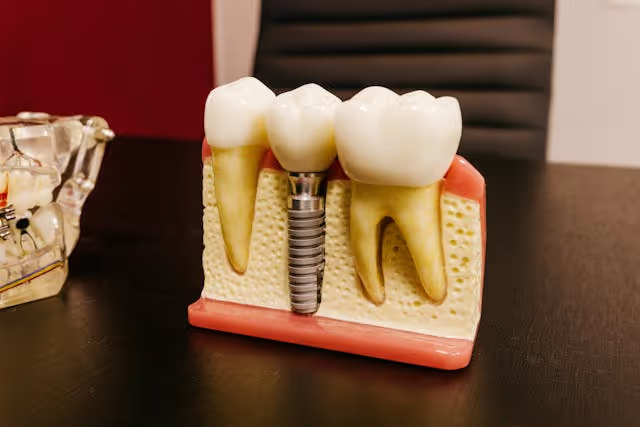
A dental implant can come through the gum during healing, when a small metal cap is meant to show. Months or years later, it usually means the gum has receded around the implant.
Gum recession, a gap between the implant and the gum, and gum that doesn’t grow back can all be treated if caught early.
If you can see or feel the metal of your implant, read our guide: I can feel or see my dental implant through my gum.
Why Is My Dental Implant Coming Through the Gum?
The 3 main causes are gum recession, thin gums and peri-implantitis. All 3 shrink the gum around the implant, so the metal underneath becomes visible.
Gum recession:
Gum recession can occur with dental implants just like it can with natural teeth. Although gum recession is not a nice appearance, it could even feel more disorienting if you have dental implants because your receding gums will show the metal implant posts rather than your actual tooth roots.
Gum recession can have much worse health consequences than just cosmetic ones. Gum recession may even cause implants to fail, in which case you might need to have the implants removed.
The following factors could result in gum recession after implants:
- Oral hygiene issues
- Smoking
- Grinding of teeth
- Malocclusion
- Problems with hormones
- Brushing too vigorously
Thinning gums:
It’s probably a sign of unhealthy gums if your gums are so thin that you can see the implant post through them. To learn what you should do to solve the issue, speak with your dentist.
Peri-implantitis:
This infection affects the area around dental implants. A loss in bone density around the implant may result from this infection, which can also cause the gums to swell up. If it is not treated in the early stages, the entire implant may need to be removed.
Smoking or poor oral hygiene may be the cause of peri-implantitis. It’s crucial to discuss a long-term maintenance plan with your dentist for your oral health with your new dental implants in order to prevent any of these signs.
If you have this infection, you might experience the symptoms listed below:
- Pus and bleeding
- Fever
- Gums that are red and swollen
- Throbbing pain
- Chewing difficulties
- Breath problems
- Implants with a loose feel
Pros and cons of full dental implants guide.
When Does a Dental Implant Come Through the Gum?
It happens at 1 of 3 times: during healing, soon after treatment, or years later.
1. During healing (first 2 to 4 weeks): A small round metal cap, called a healing abutment, sits above the gum on purpose. This is normal.
2. Soon after treatment: The implant may sit too close to the front of the jaw or at an angle. There isn’t enough gum to cover it.
3. Years later: Gum recession or peri-implantitis slowly exposes the implant.
Next, let us discuss some common solutions.
How Do You Fix a Dental Implant Coming Through the Gum?
The fix depends on how much gum and bone has been lost. Your dentist will take an X-ray first, then choose 1 of these treatments:
1. Deep cleaning around the implant, if the gum is only inflamed
2. A gum graft to cover the exposed metal
3. A new abutment or crown that sits better at the gum line
4. A bone graft if bone has been lost
5. Removing and replacing the implant in severe cases
Gums grafts:
A gum graft is when gum is removed from another area of your mouth and attached to the area where your gums are receding. Your implants’ exposed areas will be hidden by the new Gum grafts are part of our periodontal treatment in Istanbul.
Replacing the crown:
The crown may occasionally no longer fit properly as your gums change shape over time. In this situation, your dentist might advise designing a new crown that is taller and thus meets your gum at your natural gum line.
Redoing the implant:
If bone is missing, a bone graft may be needed before a new implant.
In the worst-case scenario, the entire implant procedure might need to be redone. Only severe cases of peri-implantitis or gum recession will necessitate this. Additionally, mini dental implants might be suggested by your dentist.
But what should you do if the dental implants are exposed?
veneers with gum recession treatment and care guide.
Is it normal for dental implants to be exposed?
Yes, during healing. A small metal healing abutment sits above the gum for 2 to 4 weeks to shape it before your crown is fitted.
After the crown is fitted, the implant should not be exposed. If it becomes loose or metal appears later, contact your dentist.
Now, take a look into the symptoms of dental implant rejection.
What Are the Signs of Dental Implant Failure?
The main signs of implant failure are ongoing pain, swelling, bleeding, gum recession and a loose implant. See your dentist within a few days if you notice any of them.
- Continuing pain and discomfort
- Swelling, inflammation, and bleeding
- Gum recession
- Loose implant
- Difficulty chewing
- Nerve or tissue damage
- Dental implant coming through gum
Recovery is a very important matter, follow to know more!
Will the Gum Grow Around My Implant Crown?
Yes, healthy gum grows around the implant and seals around the crown. It usually takes 2 to 4 weeks for the gum to heal, and up to 3 months to settle fully.
1. Week 1: Swelling goes down and stitches dissolve or are removed.
2. Weeks 2 to 4: The gum heals around the healing abutment.
3. Months 1 to 3: The gum takes its final shape around the crown.
Gum that has receded years later does not grow back on its own. It needs a gum graft.
What Is a Gum Shaper on a Dental Implant?
A gum shaper, or healing abutment, is a small metal cap screwed onto the implant after surgery. It shapes the gum so your crown fits naturally.
It stays in place for 2 to 4 weeks. Your dentist then removes it and fits the final abutment and crown.
Keep it clean with a soft brush. If it feels loose or falls out, call your dentist, as the gum can close over the implant.
Read more: Can Dental Impressions Pull Teeth Out.
Can you have dental implants with gum disease?

While you are still experiencing active gum disease, you cannot get dental implants. Before getting a dental implant, you must get your gum disease under control.
Healthy gums are necessary for dental implant procedures because the soft gum tissue must surround the implant to keep it stable.
Should there be a gap between my implant and gum?
No. There should be no visible gap between your dental implant and gum. Healthy gum fits snugly around the implant crown and seals it from bacteria.
A small gap may appear while the gum is still healing. If it is still there after 3 months, or food gets trapped, ask your dentist to check it.
Why Is There a Gap Between My Dental Implant and Gum?
A gap usually means the gum has receded, the crown doesn’t fit the gum line, or the gum hasn’t fully healed.
1. Gum recession from brushing too hard, smoking or gum disease
2. A crown shape that leaves space at the gum line
3. An implant placed too deep, too shallow or at an angle
4. Early healing, if the implant was placed in the last 3 months
Gaps trap food and bacteria, which can lead to peri-implantitis. Regular cleaning keeps the area healthy.
How to Choose the Best Dental Implant Clinic in Istanbul.
How do you fix a receding gum implant?
A receding gum around an implant is fixed by treating the cause, then covering the exposed area. Mild cases need deep cleaning and better brushing.
Moderate or severe cases usually need a gum graft. If bone has been lost, a bone graft may be needed too.
Mavidenta’s periodontists and implant surgeons treat gum recession around implants in Istanbul. Send us a photo on WhatsApp for a first opinion.
conclusion
A dental implant showing through the gum is normal only during healing. Later, it’s a sign of gum recession or infection.
Most cases can be fixed with cleaning, a gum graft or a new crown if treated early. Planning implants? See our dental implants in Turkey.
FAQ
Who is a good candidate for dental implants?
Anyone who is missing a single tooth, multiple teeth, or all teeth are candidates for dental implants.
Are dental implants removable like dentures or do they stay in your mouth?
No, dental implants are a permanent option.
Can you get dental implants with receding gums?
Yes, once the gum disease is treated. Some patients need a gum or bone graft first so the implant has enough support.
What causes a dental implant to show through the gum?
Common causes include gum recession, thinning gums, peri-implantitis, and improper implant placement.
Is dental implant exposure normal during healing?
Yes, the silver abutment post may temporarily protrude during healing. This is replaced by the crown later. Persistent exposure should be checked by a dentist.
If there’s a gap between your implant and gum, or the gum is receding, see our guide to dental implants coming through the gum.