

People with Type 1 or Type 2 diabetes may be able to have dental implants, particularly when their blood glucose is well managed, and their gums are healthy. Diabetes does not automatically rule out implant treatment, but it can affect healing, infection risk, and long-term implant maintenance. Suitability must therefore be assessed individually by a specialist team.
At Mavidenta Dental Clinic, a 7,000-square-meter specialist facility in Istanbul, we prioritise clinical safety above all else, making dental implants for diabetics available. Our team, including Dr. Necat Aslan (DDS, PhD in Prosthodontics with 15 years of experience), conducts rigorous medical screenings for every international patient. Understanding how your systemic health interacts with oral surgery is the cornerstone of our practice.
If you are managing diabetes and considering restorative surgery, we invite you to request a free online consultation or message us on WhatsApp at +905534843641.
Can Diabetics Have Dental Implants?
The short answer is yes, dental implants for diabetics are possible in many cases. Diabetes is not an absolute contraindication for dental implants. The degree of glycaemic control is far more important than the diagnosis itself.
A 2022 systematic review published in PubMed concluded that dental implants can be successfully integrated in patients with controlled diabetes or prediabetes. However, the study highlighted that risks significantly increase in poorly controlled cases. We must also consider your gum health, bone density, and lifestyle factors like smoking before proceeding.
How Can Diabetes Affect Dental Implant Treatment?
Wound Healing and Infection Risk
High blood sugar can lead to narrowed blood vessels and thickened capillary membranes. This often slows down oxygen and nutrient delivery to the surgical site. While not every diabetic patient experiences slow healing, the body’s immune response may be less efficient at fighting off bacteria during the initial recovery phase.
Temporary Crowns vs Permanent Crowns
Osseointegration and Bone Healing
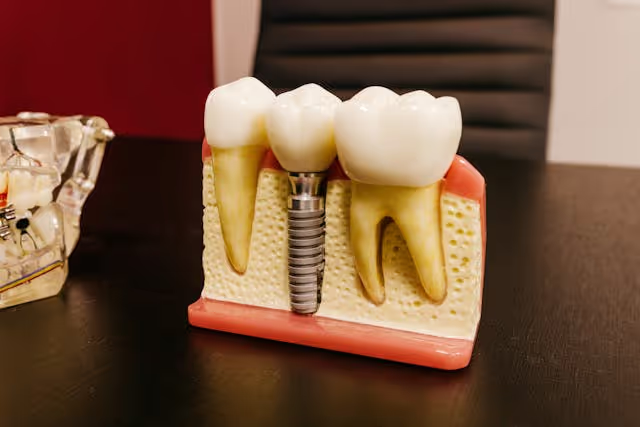
Osseointegration is the healing process through which the jawbone forms a stable connection with the dental implant. For this biological bond to form, the bone cells (osteoblasts) must be active and healthy. Stable glucose levels are essential here; fluctuating sugar can interfere with bone metabolism, potentially delaying the time it takes for the implant to become “fixed” in the jaw.
Gum Disease and Peri-Implantitis
There is a bidirectional relationship between diabetes and gum health. Poorly controlled diabetes increases the risk of periodontitis. Similarly, having active gum disease can make it harder to control blood sugar. We closely monitor for peri-implantitis, an inflammatory condition around the implant, which occurs more frequently in diabetic patients with inadequate oral hygiene.
Does the Type of Diabetes Affect Implant Suitability?
Dental Implants and Type 1 Diabetes
Type 1 diabetes does not automatically prevent you from getting implants. We focus on the stability of your condition and your history of hypoglycaemic episodes. We coordinate surgery timing around your insulin and meal schedule. It is vital to provide us with a full list of your medications during your initial assessment.
Dental Implants and Type 2 Diabetes
For Type 2 patients, the duration of the diagnosis is less critical than your current management. We evaluate your medications, such as Metformin or SGLT2 inhibitors, and any associated conditions like high blood pressure. Dr. Ahmet Yıldız, our oral and maxillofacial surgeon, carefully reviews these factors to determine the safest surgical approach.
What About Prediabetes?
Prediabetes is not a barrier to treatment, but it is a “yellow flag.” It indicates that your body is beginning to struggle with glucose regulation. We use this information to customise your aftercare and maintenance schedule to prevent future gum issues.
Why Is HbA1c Important Before Dental Implant Surgery?
What Does an HbA1c Test Show?
An HbA1c test estimates a person’s average blood glucose over the previous two to three months. Unlike a finger-prick test, which shows a snapshot in time, the HbA1c gives us a “big picture” view of how well your diabetes is managed.
Is There a Safe HbA1c Level for Dental Implants?
There is no single universal number that guarantees success. However, clinical consensus often suggests that an HbA1c below 7% or 7.5% is preferable for elective surgery. We do not use this number in isolation; we weigh it against your age, the complexity of the surgery, and your overall health. If your levels are significantly elevated, we may suggest delaying surgery until your GP helps you stabilise them.
Dental Implant Assessment for Patients with Diabetes
Before you fly to Istanbul to get dental implants for diabetics, our specialists, including Dr. Selin Kaya (Periodontist, 12 years of experience), require a detailed health profile.
Recommended Checklist
| Information to Prepare | Why It Matters |
|---|---|
| Recent Medical Summary | Helps the team understand overall systemic health |
| Current Medication List | Identifies potential drug interactions |
| Recent HbA1c Result | Supports assessment of current glycaemic control |
| Dental X-rays or CT Scans | Allows for preliminary bone volume assessment |
| Smoking Status | Combined with diabetes, smoking increases failure risk |
Cost Comparison: UK vs. Turkey (Mavidenta)
Here’s an idea of the financial gain that you can get from travelling to Turkey for dental implants for diabetics:
| Treatment Type | Average UK Price | Mavidenta (Turkey) Price | Estimated Savings |
|---|---|---|---|
| Single Implant + Crown | £2,500 – £3,000 | £600 – £800 | 75% |
| All-on-4 (Per Jaw) | £12,000 – £15,000 | £3,500 – £5,000 | 70% |
| Full Mouth Restoration | £25,000+ | £7,000 – £9,000 | 70% |
Is It Safe to Have Implants in Turkey if You Are Diabetic?
Safety depends on clinical transparency. At Mavidenta, we use only Swiss and German materials like Straumann and Nobel Biocare, which have extensive clinical data regarding their performance in compromised patients. Our 97.8% success rate is built on the fact that we refuse to rush surgery if a patient’s glucose levels are unsafe.
From First Message to Final Smile: A Mavidenta Patient Story
Robert, a 58-year-old from Manchester, had lived with Type 2 diabetes for over a decade. He had lost three lower molars and struggled with a partial denture that irritated his gums. He contacted Mavidenta via WhatsApp after his local UK dentist expressed hesitation about implants due to his HbA1c of 8.2%.
Our team, led by Dr. Özlem Yalçın, requested a detailed report from Robert’s GP. We didn’t reject him; instead, we advised him to work with his nurse to lower his HbA1c below 7.5% before travelling.
Three months later, Robert arrived in Istanbul. During his assessment, he felt a moment of doubt, worrying the flight and heat might spike his sugar. Dr. Yalçın sat with him, explained our monitoring protocol, and adjusted his appointment times to match his meal schedule.
The surgery was performed using Medigma implants. Robert stayed in Istanbul for 6 days for initial healing. We provided him with a specific diabetic-friendly soft-food guide for his recovery. Six months later, he returned for his permanent crowns.
“I was worried my diabetes meant I was stuck with dentures forever. The Mavidenta team didn’t just see a patient; they saw my whole health history. I felt safer in their clinic than I did back home,” Robert shared during his final check-up.
How Can Diabetic Patients Improve Implant Success?
- Keep Diabetes Managed: Follow the plan agreed with your GP or diabetes nurse strictly in the months leading up to surgery.
- Treat Gum Disease First: Active periodontitis must be managed before implants are placed.
- Strict Oral Hygiene: Brushing and interdental cleaning are non-negotiable.
- Avoid Smoking: Combining smoking with diabetes significantly increases the risk of implant failure.
Conclusion
The most important message this guide delivers about dental implants for diabetics is one that a diabetes diagnosis is not a reason to settle for dentures indefinitely. It is a clinical variable that requires careful assessment, honest planning, and a specialist team willing to take the time to do both properly.
The clinical evidence supports this approach. Controlled diabetes, as the 2022 systematic review confirms, does not significantly compromise implant success rates. What matters is the stability of your glucose management, the health of your gums, and the rigour of the pre-surgical screening, all of which are built into every diabetic patient assessment at Mavidenta.
Send your recent HbA1c results, your medication list, and your dental X-rays to our clinical team via WhatsApp at +905534843641 for a free specialist assessment by Dr. Necat Aslan and Dr. Ahmet Yıldız.
FAQ: Common Questions About Diabetes and Implants
Can Type 1 diabetics have dental implants?
Yes, in many cases. Suitability depends on individual assessment, condition stability, and healthy gum tissue. Coordination with your medical team regarding insulin timing is essential during the surgical phase.
What HbA1c level is required for dental implants?
There is no universal “pass” number. However, most clinicians prefer levels below 7.5%. We use your HbA1c alongside your oral health and surgical complexity to make a final safety determination.
Do dental implants take longer to heal in diabetic patients?
Some patients may require a longer osseointegration period, perhaps 4 to 6 months rather than 3, to ensure the bone has fully bonded with the implant before placing the final crown.
Does diabetes cause dental implant failure?
Diabetes itself does not cause failure, but poorly controlled blood sugar can lead to infections or poor bone healing. With proper management and expert surgical care, success rates remain very high.
Should I tell the dentist about my diabetes medication?
Absolutely. You must provide a full list of all medications. However, never stop or change your diabetes medication without direct instructions from your GP or the Mavidenta specialist team.
Why Choose Mavidenta for an Individual Implant Assessment?
Navigating dental care with a chronic condition requires honesty and expertise. At Mavidenta, we offer:
- Specialist Oversight: Your case is reviewed by PhD-level prosthodontists and maxillofacial surgeons.
- Material Guarantee: Lifetime guarantee on implants from leading global brands.
- Full International Support: VIP transfers and in-clinic translators to ensure no medical detail is lost in translation.
Diabetes does not have to be the end of your smile. It simply means you need a team that takes your health as seriously as you do.
Contact Mavidenta today for your clinical assessment. WhatsApp: +905534843641