

If you’ve been hiding your smile because of a gap in your teeth, you’re not alone. Millions of UK adults are stuck in the same impossible position. And with NHS waiting lists stretching beyond 18 months, private dental quotes pushing £2,000–£5,000 per tooth, it can be hard to get rid of that problem.
We are aware of how exhausting it can be to explore options, compare quotes, and still not find a solution that you can truly afford. For this reason, thousands of patients from the UK are now traveling to Turkey for excellent gap tooth treatment, finding that the same clinical standards, materials, and technologies are available for up to 70% less cost than comparable private treatment back home.
Over 5,000 people in the UK have benefited from the long-lasting, natural-looking results that we at Mavidenta Dental Clinic have helped achieve.
This guide will explain all the different gap tooth treatment options and how our patient care team can assist you at every stage. Ready to take the first step? Book your free, no-obligation smile consultation today!
What Is a Gap Between Teeth (Diastema)?
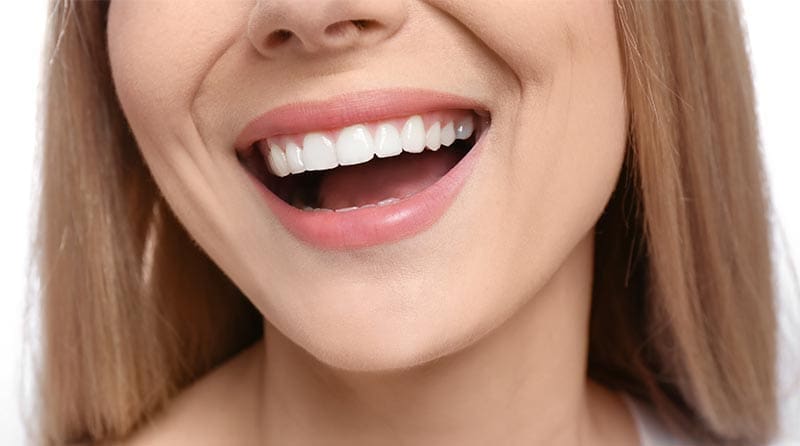
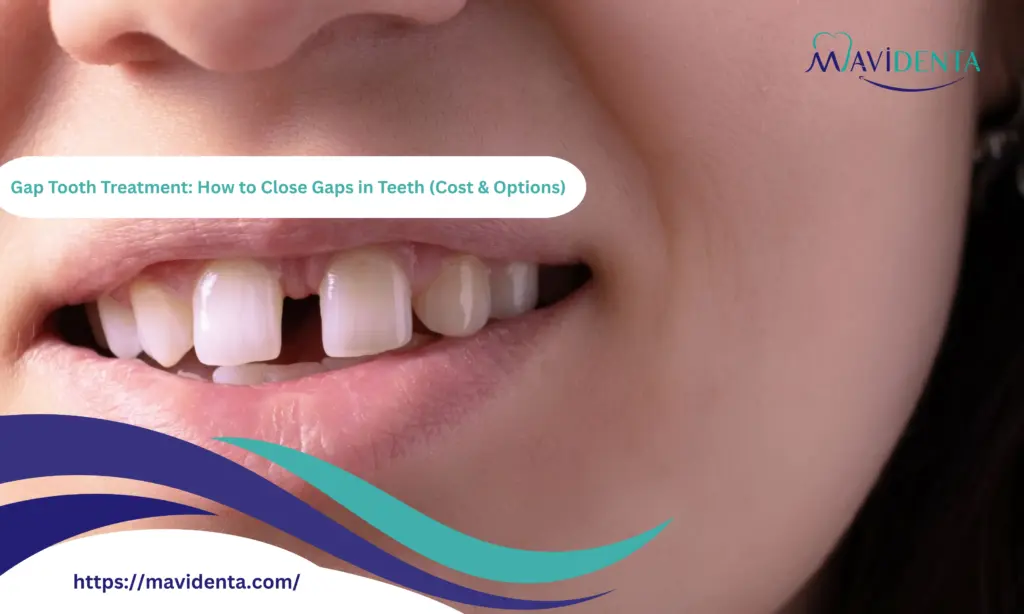
Diastema, the medical term for a gap between teeth, is an opening or space that develops between two or more teeth. It is most frequently observed between the two upper front teeth, which makes it instantly noticeable when you talk or smile, though it can appear anywhere in the mouth.
Diastema develops naturally because of:
- Genetics: The size of your jaw and your teeth just don’t match.
- Oversized Labial Frenum: The tissue attaching your top lip to your gum grows excessively large, pushing teeth apart.
- Missing or Undersized Teeth: Leaving gaps where surrounding teeth drift.
- Long-standing Infantile Behaviors: Such as thumb sucking or tongue thrusting, that gradually move teeth.
- Gum Disease: Weakens the bone holding teeth in place, resulting in unintended movement.
Not sure which gap tooth treatment is right for you? Get a free smile assessment from Mavidenta’s UK patient team, and receive a personalised treatment plan and transparent pricing within 24 hours.
dental treatments at Mavidenta
Types of Teeth Gaps
Before we dive into the different gap tooth treatments available, it’s important to understand which type you have so you can choose the right treatment.
The location, size, and number of gaps in your smile directly determine which solutions are available to you, how long treatment takes, and what the final result will look like.
Gap in front teeth (central incisors)
The noticeable gap that appears right between your two top front teeth is the most common and well-known type of diastema.
The treatment suggested at Mavidenta is directly based on the measurement of the central incisor gaps, which vary widely in size from a hairline 0.5mm space to gaps surpassing 5mm or more:
- 0.5mm–2mm gaps: perfect candidates for composite bonding, finished in a single appointment for just £90.
- 2mm–4mm gaps: Porcelain veneers provide the most natural, long-lasting outcome, starting at £150 per tooth.
- 4mm+ gaps: Orthodontic evaluation is advised before or in conjunction with cosmetic treatment.
Gap between incisors
Spaces that develop between the four upper or lower front teeth, the lateral incisors that sit right next to your central teeth, are referred to as incisor gaps. These gaps, which leave visible black triangles on either side of your teeth, are usually the result of naturally short or undersized lateral incisors, a condition dentists call peg laterals.
At Mavidenta, treatment planning is a little more complex because several teeth are involved:
- In a single appointment, composite bonding can rapidly and economically enlarge undersized teeth.
- Porcelain veneers applied to four to six teeth create a symmetrical, camera-ready smile makeover.
A complete incisor smile correction at Mavidenta typically takes two to three days to complete.
Gap in the bottom teeth
Compared to upper tooth gaps, lower tooth gaps are much less common, and many patients are unaware of how noticeable their gaps are to others because they are more difficult to self-examine.
Because lower teeth are thinner and smaller, a more accurate veneering or bonding method is needed. Before beginning cosmetic work, bite alignment must always be evaluated because reduced gaps can occasionally indicate a bite imbalance that needs to be fixed.
The quickest and least expensive first-line treatment is still composite bonding. With the right maintenance and Mavidenta’s 20-year warranty, results are permanent.
Multiple gaps (gappy teeth)
Multiple gaps across the smile, also known informally as “gappy teeth,” are one of the most common full-smile issues that Mavidenta treats for patients in the UK. Although they present a more complex clinical picture, they are completely manageable.
At Mavidenta, treatment for multiple gaps usually follows one of two paths:
- 3–4 minor gaps: This requires a composite bonding across the arch.
- 4–6 moderate gaps: This requires porcelain veneers (full smile) to fix tooth gap.
Small gap vs. large tooth gap
Gap size is one of the most important clinical factors in determining which gap tooth treatment is appropriate, and it has a direct impact on gap filling teeth cost, treatment time, and the longevity of the result.
Here is how Mavidenta’s clinical team categorises and approaches gaps by size:
- Under 1mm: Composite bonding
- 1mm–2mm: Composite bonding or veneers
- 2mm–3.5mm: Porcelain veneers
- 3.5mm–5mm: Veneers or orthodontic prep
- 5mm+: Full assessment required
What Causes Gaps in Teeth?
Tooth gaps develop for a variety of clinical reasons, and identifying yours is the essential first step towards choosing a gap tooth treatment that delivers permanent results.
The most common causes include:
- Genetics (Natural Tooth Spacing): Natural gaps between teeth that are passed down through generations might be caused by inherited jaw width or tooth form.
- Size Mismatch Between Teeth and Jaw: Gaps naturally occur when your jawbone is proportionately broader than your teeth can fill.
- Missing or Small Teeth: Over time, neighboring teeth might progressively move into the vacant area left by missing teeth.
- Gum Disease & Bone Loss: Your teeth may move and separate as a result of periodontal disease, which destroys the bone that supports them.
- Habits (Thumb Sucking, Tongue Thrusting): Over the course of months and years, teeth are physically pushed apart by prolonged pressure from thumb sucking, tongue thrusting, or dummy use.
- Frenulum Attachment Issues: If the labial frenulum, which connects your top lip to your gums, is large or positioned low, it rests between your front teeth and physically prevents them from closing together. If this is not addressed, gaps will frequently reappear following orthodontic treatment.
You can compare the next steps in our [getting Teeth Done in Turkey] guide.
Do Gaps in Teeth Get Bigger With Age?
This is one of the most frequently searched questions by UK adults who have lived with a tooth gap for years, quietly noticing it appears wider in recent photos than they remember, but are unsure whether that’s a genuine change or imagination.
The quick answer is that, yes, tooth gaps do frequently widen as people age.
Several established clinical factors contribute to the progressive widening of existing gaps in teeth as adults:
- Natural mesial drift: Mesial drift is the term for the progressive, inward, and forward movement of teeth toward the front of the mouth over the course of a lifetime.
Despite being slight, this movement has the power to drastically change spacing over decades.
- Gum recession and bone loss: As people age, their gums naturally recede, weakening the support system that holds teeth in place. This allows teeth to tilt, spin, or detach more easily than they did when they were younger.
- Tooth wear: The contact sites between neighboring teeth are altered by decades of eating, grinding, and general wear, and gaps start to widen.
- Untreated gum disease: Patients with periodontal disease experience teeth shifting and separating at a far faster pace than those with healthy gums because the condition accelerates bone loss well beyond typical age-related changes.
- Oral habits and tongue thrusting: Throughout adulthood, persistent pressure habits put cumulative strain on front teeth, progressively pushing teeth farther apart with each untreated year.
- Loss of neighboring teeth: When a neighboring tooth is lost and not replaced right away, neighboring teeth move into the space, causing previously unnoticed gaps to increase.
Is a Tooth Gap a Problem That Needs Treatment?
This is one of the most honest questions a patient can ask, and it deserves an equally honest answer. Not every tooth gap requires treatment.
Clinically speaking, many tooth gaps are quite harmless, especially small, stable, genetically inherited diastemas. It is unlikely that a gap will need medical attention when:
- For several years, its size has stayed constant with no apparent expansion.
- Around the gap location, there is no sign of recession, bone loss, or gum disease.
- There are no functional issues with speech, chewing, or biting because of the gap.
- Teeth that are otherwise healthy and well-supported have a little hairline gap of less than 1 mm.
- The patient is truly happy with their smile as it is and doesn’t feel any psychological or confidence effects.
On the other hand, there are clear, well-established clinical scenarios where a tooth gap becomes a genuine oral health concern requiring professional attention:
- Before cosmetic gap tooth treatment can safely proceed, any gap that has noticeably widened over the course of months or years indicates active tooth movement that needs to be diagnosed and managed.
- Gum disease, bleeding, enlarged, or receding gums around a gap are clinical indicators that periodontal disease is promoting the drift and separation of teeth.
- Larger diastemas or gaps between front teeth might cause lisping or airflow issues that affect a person’s confidence and understanding when speaking in social or professional contexts.
- The remaining teeth experience unequal bite pressure when a gap changes the way the upper and lower teeth touch, which accelerates wear and raises the risk of fractures throughout the arch.
- Consistent research demonstrates that smile confidence directly influences social interaction, professional performance, and overall well-being.
How to Fix a Gap in Teeth (All Treatment Options Explained)
There has never been a wider range of proven, clinically tested options for gap tooth treatment than there is today.
Every patient is evaluated individually by our globally qualified specialists at Mavidenta, who only suggest the course of action that will produce the most cost-effective, long-lasting, and natural-looking outcome for your unique smile.
Braces for Teeth Gap
One of the most clinically effective ways to close tooth gaps is still using traditional fixed braces, especially for moderate-to-large gaps larger than 3.5 mm or when numerous teeth need to be repositioned along the entire arch, rather than just one tooth at a time for cosmetic purposes.
Invisalign for Gap Teeth
The most popular brace-free orthodontic treatment for gap teeth among Mavidenta’s adult patients in the UK is Invisalign, which offers clinically proven gap closure without the aesthetic impact of fixed metal brackets and the freedom to take the aligners off for social events, eating, and drinking.
Dental Bonding (Gap Filling Without Braces)
The quickest, least expensive, and most common single-visit gap tooth treatment at Mavidenta is composite dental bonding. For gaps up to 3mm, it regularly produces results that are virtually identical to natural teeth at a fraction of the price of orthodontic options.
Marcus, 39, London: “I expected it to look fake. It doesn’t; it looks completely natural. I had two teeth bonded at Mavidenta and was eating normally the same evening. Total cost, including my flight, was still less than one tooth back in London.”
Porcelain Veneers
One of the biggest value advantages Mavidenta provides UK patients is porcelain veneers, which are the gold standard for gap tooth treatment for those looking for a permanent, natural-looking, and drastically transformative result.
Compared to similar London cosmetic practices, porcelain veneers can help you save up to 75%.
Dental Crowns
When the teeth next to the gap are severely damaged, weak, or substantially restored, dental crowns are advised for gap tooth treatment. In these cases, a veneer by itself is unable to give adequate structural support in addition to the aesthetic correction.
Dental Bridges or Implants
Dental implants or bridges are the only options that can address the functional and aesthetic effects of a gap in a tooth that is caused by a missing tooth rather than natural spacing.
Identifying the best option for your circumstances:
- Dental implants: These implants preserve jawbone density and endure for at least 20 to 25 years by surgically inserting a titanium post into the jawbone and covering it with a customized porcelain crown.
- Dental bridges: To close the gap without requiring surgery, a prosthetic tooth (pontic) is fixed to crowns positioned on the teeth on either side of it. Bridges require healthy neighboring teeth to be prepared as anchors, but they are quicker and less expensive than implants.
- Implant-supported bridge: The best approach for numerous consecutive lost teeth, combining implant stability and bridge efficiency.
Gum Disease Treatment (If Periodontal Issues cause a Gap)
Treating the periodontal condition is a necessary clinical first step before beginning any cosmetic gap tooth treatment safely or effectively if gum disease has caused or worsened your tooth gap.
Because trying cosmetic restoration over active gum disease ensures treatment failure and carries significant long-term oral health risks, Mavidenta routinely performs a complete periodontal health examination on any patient who presents with a new or widening gap.
Pros and Cons of Each Treatment
Choosing the right gap tooth treatment means weighing genuine advantages against real limitations, not just reading a list of clinical benefits curated to favour one option over another.
At Mavidenta, we think every patient in the UK should have a clear understanding of what each treatment offers, what it requires, and where its true limitations are.
Braces
Pros:
- Permanently repositions teeth, not just cosmetic coverage.
- Most clinically effective for large or complex gaps.
- Corrects bite alignment alongside gap closure.
- Most affordable orthodontic option.
- Suitable for teenagers whose jaws are still developing.
- Covered by Mavidenta’s 20-year clinical warranty.
Cons:
- The most visible treatment option is the metal brackets are noticeable.
- Longest treatment timeline, between 12 and 24 months.
- Dietary restrictions throughout treatment.
- Regular adjustment appointments are required every 6–8 weeks.
- The retainer must be worn post-treatment to maintain results.
- Oral hygiene is significantly more demanding with brackets.
Invisalign
Pros:
- Virtually invisible and undetectable in professional settings.
- Removable for eating, drinking, and social occasions.
- No dietary restrictions throughout treatment.
- Fewer in-person appointments than fixed braces.
- Digitally planned with full treatment mapped before you begin.
- Remote monitoring is available through the Mavidenta UK coordinator.
Cons:
- Higher cost than traditional braces.
- Requires 20–22 hours daily wear, and compliance is critical.
- Not suitable for very large gaps or complex bite correction.
- Aligners can warp if exposed to hot drinks.
- Lost or damaged aligners incur replacement costs.
- Results are slower than veneers for purely cosmetic cases.
Dental Bonding
Pros:
- The fastest and best solution for teeth gap and it’s completed the same day.
- Most affordable option.
- No drilling, no anaesthesia, no recovery time.
- Fully reversible with no permanent tooth alteration.
- Natural-looking results when applied by skilled clinicians.
- No laboratory wait and completed entirely chairside.
Cons:
- Shorter lifespan than veneers, up to 5–7 years before touch-up.
- More susceptible to staining from coffee, tea, and red wine.
- Less durable than porcelain under heavy bite pressure.
- Not suitable for large gaps exceeding 3–4mm.
- Can chip with nail biting or hard food habits.
- Colour match may subtly shift over time versus natural teeth.
Porcelain Veneers
Pros:
- Longest-lasting cosmetic result up to 15–20 years.
- Dramatically transforms shade, shape, and size simultaneously.
- Highly stain-resistant, as porcelain does not discolour.
- Natural translucency closely mimics real tooth enamel.
- Covered by Mavidenta’s 20-year written warranty.
- Closes gaps of any size without orthodontic treatment.
Cons:
- Higher upfront cost than bonding.
- Requires minor irreversible enamel preparation.
- Not suitable for patients with very thin enamel.
- Damaged veneers require full replacement rather than simple repair.
- Bite assessment is essential and unsuitable for heavy grinders without a night guard.
Dental Implants
Pros:
- Most permanent gap tooth treatment up to 20–25+ years.
- The only treatment that preserves jawbone density.
- Functions and feels identical to a natural tooth.
- No impact on adjacent healthy teeth.
- Eliminates the gap permanently with no future drift.
Cons:
- Longest overall treatment timeline with 3–6 months.
- Surgical procedure requiring a healing period.
- Higher upfront cost than bridgework.
- Bone grafting may be required if significant bone loss is present.
- Not suitable for active smokers or uncontrolled diabetics without assessment.
Dental Bridges
Pros:
- Faster than implants and completed in 3–5 days.
- No surgical procedure or healing period.
- Lower cost than implants.
- Immediately restores full chewing function.
- Natural-looking result indistinguishable from real teeth.
Cons:
- Requires preparation of healthy adjacent teeth as anchors.
- Does not preserve jawbone density beneath the gap.
- Cleaning beneath the bridge requires specialist flossing tools.
- Lifespan of 10–15 years, shorter than implants.
- The gap may widen beneath the bridge over time as bone resorbs.
Gap Tooth Treatment Price: Cost Breakdown
Now, we are at the part that matters to most patients, which is the dental gap filling cost.
Below is an honest, comprehensive breakdown of every major teeth gap treatment price:
| Treatment | UK Private Cost | Turkey Cost |
| Braces Cost for Closing Gaps | £3,000–£6,000 | £800- £1,100 |
| Invisalign Cost for Gaps | £3,500–£7,000 | £600 – £1,200 |
| Dental Bonding Cost | £90 per tooth | £300–£800 per tooth |
| Veneers Cost for Gap Teeth ( Full smile) | Starts from £1,600 | £7,000–£12,000 |
What’s the Cheapest Way to Fix a Gap?
The most affordable method of dental gap filling is composite dental bonding, which starts at just £90 per tooth at Mavidenta. This makes it the most accessible treatment for gap teeth in the UK for individuals who want quick, natural-looking results without the need for orthodontic schedules or surgery.
How to Choose the Best Solution for Your Gap
With so many proven gap tooth treatment options available, choosing the right one can feel overwhelming. There is no one “best” gap tooth treatment; rather, there is simply the most appropriate treatment for your particular gap, financial situation, schedule, and long-term goals:
- Based on gap size: Composite bonding works best for small gaps under 2 mm, porcelain veneers work best for moderate gaps between 2 and 4 mm, and an orthodontic evaluation is usually necessary for wide gaps over 4 mm.
- Based on budget: Naturally, your treatment plan will be determined by your available budget; nevertheless, Mavidenta’s price allows all budgets to enjoy truly excellent, clinically sound gap tooth treatment.
- Based on treatment time: Your selections are greatly reduced by taking into account how much time you can actually devote to treatment. Mavidenta’s selection meets all of your timing needs.
- Based on long-term durability: Dental implants have a recorded lifespan of 20–25+ years, porcelain veneers normally last 15–20 years, and composite bonding lasts 5–7 years.
- Based on age (teens vs adults): Since the jaw and teeth of teens under the age of eighteen are still growing, it is not clinically advised to have permanent cosmetic restorations like veneers and implants until the growth is finished.
For Adults 18–40, all gap tooth treatment options are available; however, porcelain veneers and composite bonding consistently deliver outstanding results, and implants are highly successful provided bone density is adequate.
teeth reconstruction cost and treatment guide
How Long Does Gap Tooth Treatment Take?
Treatment time is one of the most decisive factors for UK patients considering gap tooth treatment abroad.
Here is an honest, specific breakdown of exactly how long each gap tooth treatment takes at Mavidenta:
- Composite Dental Bonding: The quickest gap tooth treatment possible, with a single session lasting 60-120 minutes. No waiting period, no laboratory work, and no need for a follow-up appointment.
- Invisalign for Gap Teeth: The entire process of Invisalign gap tooth treatment takes 6-12 months, but most importantly, you just need to make your initial in-person visit to Mavidenta, which usually takes two to three days and includes digital scanning, treatment planning, and the fitting of your initial aligner sets.
- Braces for Closing Gaps: Depending on the patient’s age, the magnitude of the gap, and the complexity of their bite overall, traditional fixed braces often take 6-18 months to complete.
- Porcelain Veneers: Porcelain veneers, which are usually finished in a single visit lasting 1-2 weeks, provide the most noticeable gap tooth treatment outcome in the shortest amount of time in the clinic.
What Happens If You Don’t Treat a Tooth Gap?
Clinically speaking, untreated tooth gaps rarely remain the same, and the effects of prolonged delay go far beyond aesthetics into the matter of actual oral health, making gap tooth treatment increasingly difficult and expensive the longer it is put off.
This is a straightforward, fact-based explanation of what truly happens if a tooth gap is ignored for months or even years:
- Progressive Gap Widening: When a tooth gap is left untreated, it often grows over time, which is the most obvious and immediate effect.
- Increased Tooth Wear: Bite pressure redistributes unevenly throughout the remaining dental arch when a gap changes the usual contact points between the upper and lower teeth. Over time, this increased wear can weaken teeth that were formerly healthy.
- Food Trapping and Decay Risk: Bacterial plaque and food particles thrive in the spaces between teeth. Higher decay rates and the direct creation of more cavities are the results of this.
- Gum Disease Progression: In addition to causing tooth decay, plaque buildup in gap sites actively encourages periodontal disease in the gum tissue around the tooth.
- Bone Loss at Missing Tooth Sites: The jawbone resorbs more quickly in gaps brought on by missing teeth, losing density, height, and width more quickly.
- Speech Issues Worsen: Clinical research suggests that untreated gaps tend to produce more noticeable speech patterns as the gap expands. Front tooth gaps cause airflow anomalies that impact the production of particular sounds.
Why Patients Choose Mavidenta for Gap Tooth Treatment in Turkey
Every year, thousands of UK adults decide to travel abroad for dental treatment. So why do over 5,000 UK patients specifically choose Mavidenta for their gap tooth treatment? Here is the honest, evidence-based answer:
- Specialists with International Training: All gap-tooth treatments are performed by dentists trained at top dental schools in Europe and Turkey.
- JCI Accredited: Less than 5% of dental facilities worldwide are JCI Accredited, the same independent quality standard that is applied to the best hospitals in the world.
- Costs are reduced by up to 75%: With fully transparent, all-inclusive pricing and no hidden charges, guaranteed in writing.
- On-Site Dental Laboratory: For better fit, shade, and turnaround time, custom restorations are made under close clinical supervision.
- Dedicated UK Patient Coordinator: Handling clinical communications, accommodation, flights, and transfers from your initial WhatsApp message to your last post-treatment check-in.
- 5,000+ UK Patients Treated: With a reputation, track record, and service infrastructure tailored to British patients’ needs.
- 20-Year Warranty: The longest clinical guarantee available from any dental provider in Turkey or the UK.
Conclusion: Which Gap Tooth Treatment Is Right for Your Smile?
If there is one thing this guide makes clear, it is this: there is a gap tooth treatment for every smile, every budget, and every timeline.
Whether your gap is a tiny 1mm spacing that has been bothering you for years or a large diastema that has affected how you talk, smile, and carry yourself in public, Mavidenta offers a tried-and-true, reasonably priced, and clinically superior treatment. And more often than not, that solution is easier, quicker, and easier to achieve than you now believe.
The clinical complexity of the final gap tooth treatment rises with each additional year of delay. The treatment is simpler than you think.
Start Your Free Gap Tooth Treatment Consultation, and Contact Us Through WhatsApp Today!
Frequently Asked Questions
What is the fastest way to close a tooth gap?
The fastest way of filling in a tooth gap is dental bonding, which can be done in a single 30- to 60-minute session without the need for anesthesia or recovery time. Composite bonding at Mavidenta starts at just £90, while professional clinics in the UK charge between £400 and £800 per tooth.
What’s the cheapest way to fix a gap?
The least expensive method of filling in a tooth gap is composite bonding, which starts at £90 per tooth at Mavidenta, up to 75% less than private rates in the UK. With the right care, treatment lasts five to seven years, needs no surgery, and only requires one visit.
Is it possible to close the gap without braces?
Yes, depending on the size of the gap, dental bonding, porcelain veneers, or dental implants can be used to close it without the need for braces. At Mavidenta, the majority of cases are finished in one to three days, and no extensive orthodontic treatment is needed.