Brown stains on teeth can feel like a constant source of embarrassment, affecting your confidence in every conversation, photograph, and social situation. Thousands of adults in the UK suffer from persistent tooth discolouration that cannot be treated with over-the-counter whitening strips.
With NHS dental appointments becoming increasingly difficult to secure and private UK treatments costing up to £3,000 for comprehensive stain removal and cosmetic work, many people are forced to choose between compromising their appearance and incurring financial hardship.
What if I told you there is a way to combine real affordability with top-notch dental knowledge? Turkey is becoming the top location in Europe for modern cosmetic dentistry, providing up to 70% cheaper prices for the same excellent procedures you would get in London or Manchester.
This article will explain the causes of brown discoloration, which treatments are effective, and how dental tourism in Turkey is helping UK patients save thousands of pounds while getting amazing results. Ready to discover your options? Get a personalized treatment plan in as little as 24 hours by scheduling your free virtual consultation with one of our UK patient coordinators today.
What Are Brown Stains on Teeth?
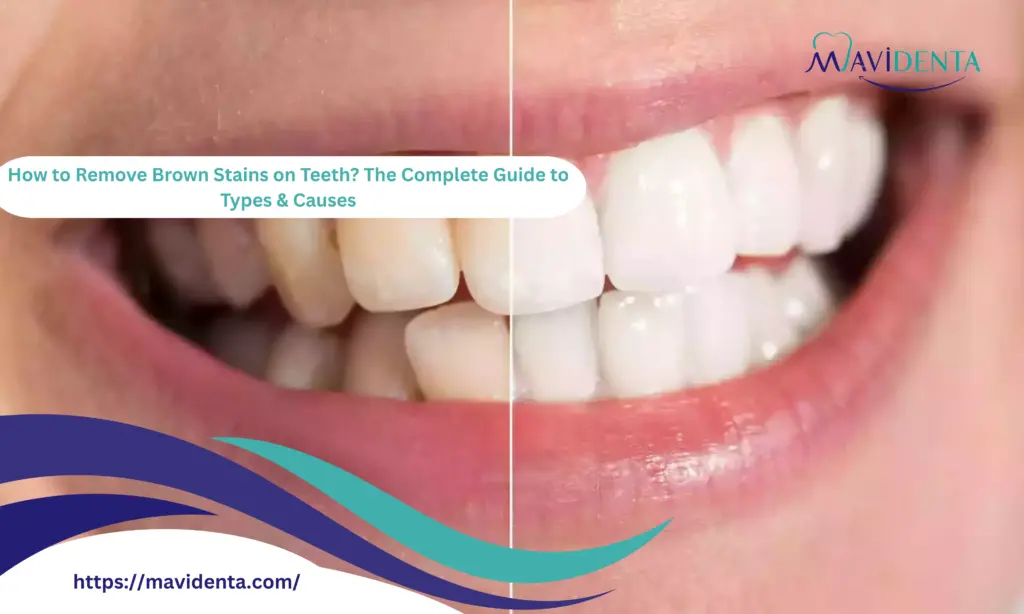
Brown stains on teeth are spots of discolouration that show up on the tooth surface or inside the enamel itself. They can range in color from light tan to dark brown. These stains might show up as spots, streaks, or extensive discoloration on one or more teeth.
While many individuals dismiss brown spots on teeth as solely cosmetic, the truth is more complicated; they frequently indicate underlying dental health issues that necessitate professional treatment.
The cause of dark stains determines whether they are medicinal or cosmetic:
Medical issues consist of:
- Cavities and tooth decay (seen as brown or black patches).
- Enamel hypoplasia (developmental abnormalities that result in persistent brown spots).
- Dental fluorosis (too much fluoride exposure during tooth growth).
- Intrinsic discolouration is caused by internal tooth injury or dying nerves.
Cosmetic problems consist of:
- Surface discoloration from tobacco, red wine, tea, or coffee.
- Brownish yellowing associated with aging.
- Enamel coloration from food and beverages.
The key difference is that dark stains that feel rough, cause irritation, or get worse over time are probably signs of decay or structural damage that has to be treated right away.
Your dark stains may need restorative treatment, cosmetic intervention, or both, depending on a thorough dental examination. Our Mavidenta experts offer thorough digital evaluations to pinpoint the underlying issue and suggest the best course of action.
Types of Brown Stains on Teeth
Brown spots on teeth show in different forms depending on their origin, and knowing which type you have is essential for choosing the most effective treatment approach.
Extrinsic Stains (Surface Stains)
Extrinsic stains, which come from outside sources including tobacco, coffee, tea, and dark meals, form on the outer layer of enamel. Professional whitening procedures work effectively for these stains, which usually have a lighter brown appearance.
They are the simplest to get rid of, frequently removed entirely in a single session with airflow polishing or laser whitening.
Intrinsic Stains (Inside the Tooth)
Intrinsic stains develop within the tooth’s inner structure and are caused by trauma, certain drugs (such as tetracycline), excessive fluoride during childhood, and internal decay.
Surface whitening is insufficient to get rid of these stains, which have a darker brown or grayish appearance. Veneers or crowns are typically needed as a treatment to permanently cover the discolouration.
Brown Stains Between Teeth
Brown Stains Between Teeth typically indicate tartar accumulation or early cavity formation because they gather in small interdental areas that are inaccessible to brushing.
These need to be cleaned by professionals, and if deterioration has set in, restoration work may be necessary.
Brown Stains at the Gum Line
Brown stains on the gum line are typically caused by plaque and calculus collection where the tooth meets the gum. The risk of gum disease is increased by this hard, crusty brown accumulation, which a dental hygienist must scale.
Common Locations of Brown Stains
Brown stains are frequently found in:
- On front teeth: highly visible, usually from coffee/tea or smoking
- On molars: often indicate decay in grooves and pits
- Between teeth: tartar buildup or interdental cavities
- Along the gum line: calculus deposits or root surface decay
- On one single tooth: may signal nerve death or previous trauma requiring root canal assessment
You can compare the next steps in our [the Best Teeth Whitening Turkey for a Radiant Smile] guide.
What Causes Brown Stains on Teeth?
Brown stains on teeth develop from numerous sources, ranging from daily lifestyle habits to underlying medical conditions. Here are the primary culprits behind tooth discoloration.
Staining Foods and Drinks
Food and beverages are the most typical sources of extrinsic dark stains. Chromogens, which are colored molecules found in several meals, attach to tooth enamel, particularly when they are consistently consumed without good oral hygiene:
- Red wine, tea, and coffee: Include tannins that gradually brown food.
- Berries and dark sodas: Acidic drinks that leave a color deposit while eroding enamel.
- Spices and sauces: Tomato sauce, balsamic vinegar, curry, and soy sauce all create long-lasting stains.
Tobacco Stains
Some of the most enduring brown discolorations are caused by tobacco stains. Smoking’s nicotine and tar quickly erode tooth enamel, turning teeth yellow-brown in a matter of months.
Staining is another effect of vaping; however, usually not as bad as with regular cigarettes. Chewing tobacco also causes dense dark stains between teeth and along the gum line, and increases the risk of oral cancer and gum recession.
Poor Oral Hygiene
Does poor brushing lead to brown stains? Absolutely.
When you don’t brush twice a day or floss, plaque hardens into tartar (calculus), a crusty brown deposit that regular brushing can’t remove. Brown degradation marks result from this plaque and tartar buildup because it collects staining agents and fosters an environment where bacteria can make acids.
Fluorosis and Enamel Defects
When teeth are developing, intrinsic brown stains are caused by enamel defects and fluorosis. Excessive fluoride exposure in early childhood might result in permanent brown or white mottled areas.
Thin, brownish patches that stain easily and disintegrate more quickly are left behind by enamel hypoplasia, which is inadequate enamel production brought on by childhood illness or developmental defects.
Trauma and Dental Restorations
Dental restorations and trauma can cause individual teeth to turn brown. Internal bleeding from a knocked-out tooth might eventually cause the tooth to darken as the nerve dies.
Old fillings and crowns, like old silver amalgam fillings, frequently leak metallic substances, staining the surrounding tooth structure grey-brown. Additionally, tooth injuries can cause many problems, like decay beneath failing crowns, causing brown edges at the gum line.
Medical Conditions
In less evident ways, medical conditions might cause dark stains. The development of enamel is impacted by Celiac disease effects, leading to brown abnormalities and increased vulnerability to cavities.
Also, certain medications like Tetracycline antibiotics might result in permanent grey-brown banding in children. Young patients’ developing teeth might potentially be harmed by radiation and chemotherapy.
Is That Brown Spot a Stain or a Cavity?
Distinguishing between a harmless brown stain and a cavity requiring urgent treatment can be challenging without professional examination. However, certain tell-tale signs help you assess the severity before your dental appointment.
Signs It May Be a Stain:
- Smooth surface texture when you run your tongue over it
- No pain or sensitivity, and you can consume hot, cold, or sweet foods without discomfort.
- Symmetrical appearance, like coffee stains on front teeth.
- Gradual discoloration that slowly worsened over months or years.
- The brown colour appears superficial and not deep.
- Consistent colour without darker spots or visible holes.
Signs It May Be a Cavity:
- Rough or sticky texture that catches on floss.
- Pain or sensitivity when eating sweet, hot, or cold foods.
- Visible hole or pit where enamel has broken down.
- Deep, concentrated discoloration indicates advanced decay.
- Recent or rapid appearance that darkened significantly within weeks.
- Food trapping consistently gets stuck in the brown area.
How to Remove Brown Stains from Teeth
Removing brown stains on teeth requires selecting the right treatment based on stain type, severity, and location.
Professional Solutions for Removing Tooth Discoloration
Stronger whitening agents and modern technology that aren’t available in retail items are accessible to dentists:
- Laser teeth whitening: Uses a unique light to brighten teeth 8–12 shades while removing surface and moderate deep stains in 60–90 minutes.
- Professional dental scaling and cleaning: Before any whitening procedure, tartar and calculus must be removed.
- Airflow polishing: Removes surface stains without causing enamel damage by using pressured water, air, and fine powder.
Home Whitening Products
Mild extrinsic stains can be gradually improved using home whitening products:
- Whitening toothpaste: It takes two to six weeks to see noticeable results, and it removes only surface stains.
- Whitening strips: Peroxide-based films that are worn for 30 minutes every day for two to four weeks, they frequently result in uneven and sensitive results.
- LED whitening kits: Without expert supervision, home appliances with gel trays may irritate gums.
When Is a Brown Stain a Dental Emergency?
When a dark stain is accompanied by an active infection, excruciating pain, or quick deterioration, it indicates a dental emergency. You most likely have an abscessed tooth if you observe a brown area combined with fever, facial swelling, or abrupt tooth pain. Similar to this, a brown stain that develops right after face trauma could be a sign of internal tooth damage that needs to be fixed right away.
Warning Signs to Watch For:
- Severe, throbbing pain: A chronic toothache that doesn’t go away with over-the-counter pain relievers or gets worse at night.
- Facial swelling: Brown discolouration accompanied by swelling of the cheek, jaw, or neck.
- Unexpected tooth darkening following damage: A tooth that turns brown or gray a few days after being knocked.
- Brown area that spreads quickly: Decay is clearly growing in a matter of weeks as opposed to months.
- Brown stains on a loose tooth: Advanced infection-related bone loss.
How Much Does It Cost to Remove Brown Stains?
The cost to get brown stains off teeth varies dramatically depending on the treatment required, the severity of discoloration, and, most significantly, where you receive care.
Private dentistry costs have skyrocketed in the UK in recent years, and many customers are paying premium rates for operations that are 60–70% less expensive at internationally recognized clinics like Mavidenta.
Here are the most used whitening treatments and their costs:
| Treatment | Cost in Turkey | Cost in the UK |
| Regular Dental Cleaning | £30-£50 per session | £75-£150 per session |
| Teeth Whitening | – £120-£200 for in-office laser whitening. – £80-£120 for professional take-home kits. | – £400-£800 for in-office laser whitening. – £200-£400 for take-home professional kits. |
| Dental Bonding | £60-£100 per tooth | £200-£400 per tooth |
| Veneers | £150-£550+ per tooth | £500-£1,500+ per tooth |
Stop overpaying for brown stain removal, and schedule your free Mavidenta consultation today to receive a detailed treatment plan with transparent pricing.
Why Choose Mavidenta to Remove Brown Stains on Teeth?
Choosing where to address brown stains on teeth is what makes international treatment straightforward and stress-free. Here’s why choose Mavidenta for teeth whitening treatments:
- Proven Track Record with UK Patients: Having spent more than 12 years dealing with British patients, we have a thorough understanding of your expectations and worries regarding receiving treatment overseas.
- Internationally Recognized Standards: Mavidenta is certified to ISO 9001:2015. We only utilize FDA-approved products (Ivoclar Vivadent) and Swiss whitening equipment (Enlighten, Philips Zoom), and our sanitation procedures go above and beyond UK CQC requirements.
- Leading 20-Year Warranty: With a 20-year guarantee on veneers, crowns, and implants, we have the longest warranty period in the industry.
- Dedicated Coordinators of Patients: You are paired with an English-speaking personal coordinator who oversees every aspect of your trip from the moment you make your initial inquiry.
- Advanced Diagnostic Technology: Before starting treatment, we can show you the expected results thanks to our digital imaging suite’s intraoral 3D scanners.
- Transparent, All-Inclusive Pricing: Our quotes include everything with no surprise charges.
- Comprehensive Aftercare for UK Patients: We provide detailed aftercare instructions, UK-compatible dental products, and remain available for virtual follow-ups.
- Real Patient Success Stories: Sarah from Manchester wrote: “I actually smile in photos now, something I haven’t done since childhood. The investment changed my life, and I saved enough to take my family on holiday with the difference.”
Read more about [the best teeth straightening and whitening turkey] before choosing the right option.
Conclusion: Professional Solutions for Brown Stains at Mavidenta
Brown stains on teeth don’t have to be a permanent source of embarrassment or a barrier to the confident smile you deserve.
Whether the cause of your discoloration is years of coffee drinking, childhood medications, or poor oral hygiene, there are efficient alternatives that can significantly improve your appearance, and they’re far more affordable than you might imagine.
The same internationally recognized treatment, superior supplies, and skilled professionals found in London’s most prominent practices will be provided to UK patients at 70% less at Mavidenta.
Your smile transformation starts with a simple conversation. Book your free virtual consultation with Mavidenta today, no obligation, no pressure, just honest professional advice about your options
Frequently Asked Questions
What is the fastest way to remove brown stains from teeth?
The quickest results can be achieved with professional in-office treatments. While porcelain veneers offer an instant makeover in as little as five to seven days, laser teeth whitening eliminates surface stains in sixty to ninety minutes.
Veneers are the best way to remove brown stains from teeth because they provide permanent coverage for deep stains that whitening alone cannot.
Can whitening toothpaste remove brown stains?
Whitening toothpaste can remove brown spots on teeth that are mild and come from coffee or tea, and results usually appear two to six weeks after regular usage.
Deep brown stains brought on by decay, medication, or internal discoloration, however, cannot be removed by it. Professional procedures like veneers or laser whitening, which remove stains 8–10 shades lighter, are necessary for full correction of these tenacious stains.
Does Poor Brushing Lead to Brown Stains?
Yes, brown stains are directly caused by insufficient brushing. Bacteria produce acids that cause decay and brown stains when plaque and tartar build up from irregular brushing.
Brushing less than twice a day enables food and drink coloring agents to more thoroughly penetrate enamel. Calculus formation, which manifests as hard brown deposits along the gum line, is also made possible by poor oral hygiene.
How to prevent brown stains on teeth?
To avoid 80% of stains, use fluoride toothpaste twice a day and floss once a day. Rinse your lips after drinking curry, red wine, tea, or coffee. To get rid of tartar accumulation, schedule a thorough cleaning at your dentist’s every six months. Steer clear of smoking, which leaves behind lingering dark nicotine stains. Using a straw to drink staining beverages lessens the chance of discoloration and minimizes teeth contact.