Medically reviewed by Dr. ÖZLEM YALÇIN, DDS, with 15+ years in cosmetic dentistry.
If you’re struggling with failing teeth or uncomfortable dentures, you’re not alone. You may feel years older than you actually are, avoid certain foods, or have stopped smiling in pictures. The psychological effects of losing teeth extend far beyond their appearance; they can significantly impact confidence, dietary habits, and overall well-being.
Because of this, deciding between All on 4 and All on 6 dental implants is a big investment in your future, and you should get honest, straightforward advice.
For this reason, many patients in the UK are finding Turkey to be a reliable option for top-notch implant dentistry, where they can save up to 70% compared to private fees in the UK without sacrificing quality or safety.
In this comprehensive guide, we’ll explain the key differences between all on 4 vs all on 6 dental implants, help you understand which option suits your specific needs, and break down the real costs.
Ready to take the first step? Book your free video consultation with our specialist team today, no obligation, just expert advice tailored to your situation.
All on 4 vs All on 6 Dental Implants: What Is the Difference
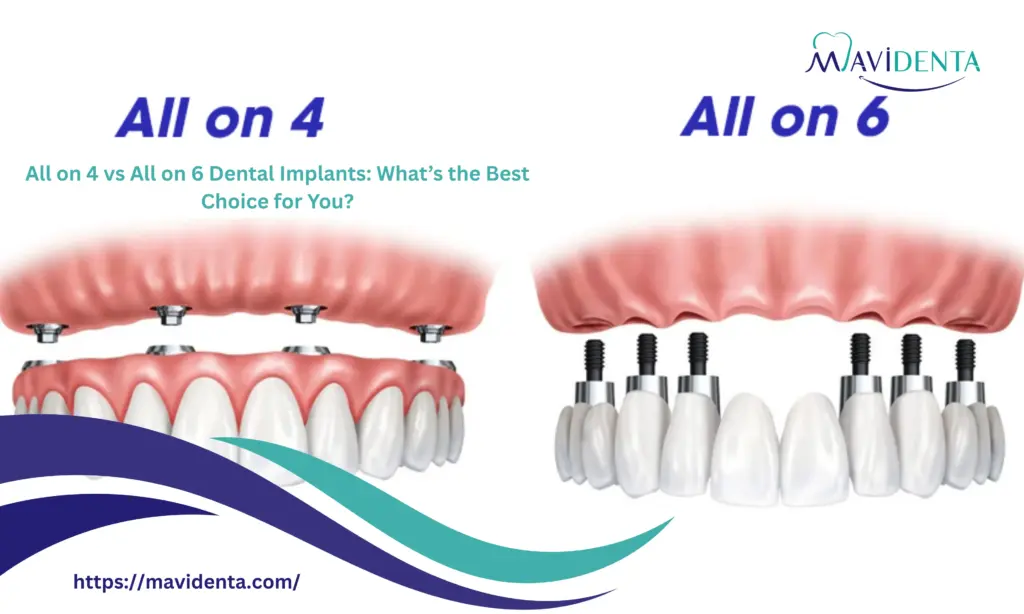
The fundamental difference between All on 4 vs All on 6 dental implants lies in the number of titanium posts supporting your new teeth.
Key difference between all-on-4 and all-on-6 include:
- Support structure: All on 6 distributes force among six implants, whereas All on 4 uses fewer anchor points with precise angulation.
- Bone requirement: All on 6 requires sufficient bone at six placement locations, while All on 4 works with less bone density (usually avoiding grafts).
- Treatment time: All-on-6 may require a little more planning, but both may be finished in three to five days.
- Long-term stability: For patients who want to live as long as possible or who have stronger bite forces, All on 6 provides improved stability.
What Are All-on-4 Dental Implants?
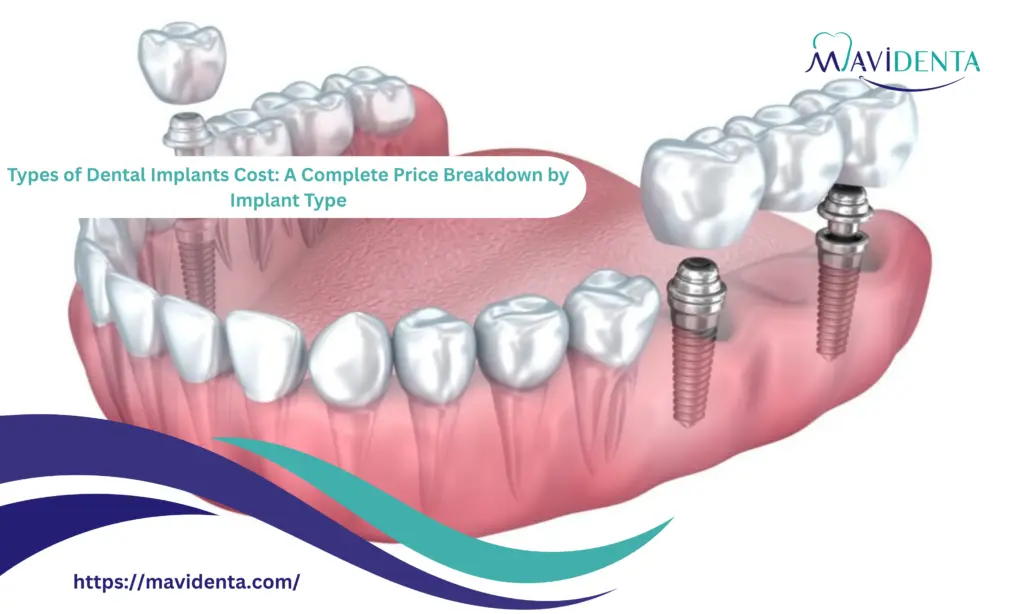
All-on-4 dental implants are a revolutionary full-arch restoration technique that replaces an entire set of upper or lower teeth using just four titanium implants.
This minimally invasive procedure, which was created by Nobel Biocare in the 1990s, maximizes contact with existing bone and, in about 85% of cases, eliminates the need for bone grafting by carefully placing two straight implants in the front of your jaw and two angled implants (at 30-45 degrees) toward the back.
The unique feature of All-on-4 is the angled posterior implants, which provide outstanding stability while preventing sinus cavities and areas of bone loss. This entails quicker treatment, cheaper expenses (usually 60–70% less than conventional implant-per-tooth methods), and instant outcomes.
What Are All-on-6 Dental Implants?
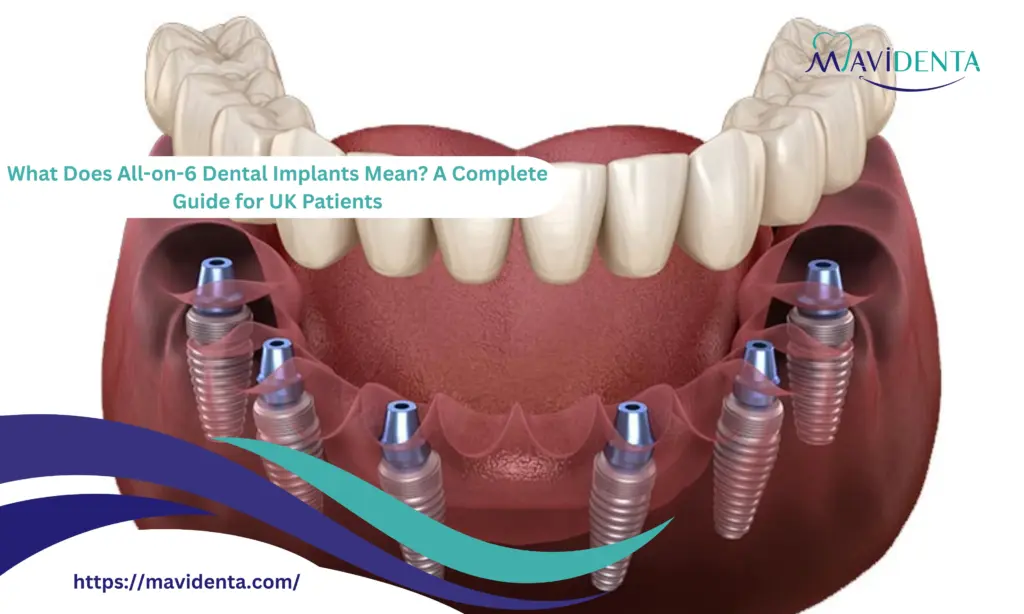
Using six titanium implants to support an entire set of replacement teeth, All-on-6 dental implants are an improved full-arch restoration technique that provides better stability and load distribution than All-on-4.
Patients with strong bite forces, adequate bone density, or those looking for optimal long-term durability may benefit most from this procedure, which puts implants more evenly throughout your jaw, usually with straighter positions rather than extreme angles, creating a stronger foundation.
All-on-6 requires sufficient bone volume at six placement locations, which may require bone grafting if you’ve seen considerable degradation.
All on 4 vs All on 6 Dental Implants: What the Numbers Actually Mean
The “4” and “6” in All on 4 vs All on 6 dental implants refer to the precise number of titanium implant fixtures surgically placed into your jawbone to anchor your full-arch prosthesis.
They essentially determine the complexity of the treatment, the structural engineering, the amount of bone needed, and the restoration’s long-term biomechanical function.
Here’s what the numbers truly indicate:
- Load distribution: Four implants each support about 25% of your bite force (about 50–70 kg), whereas six implants lower the individual load to about 16–17% each.
- Bone contact surface: All-on-6 improves overall stability by offering around 50% more titanium-to-bone integration area.
- Angulation requirements: While All-on-6 typically uses straighter, more vertical placement, All-on-4 requires exact posterior tilting of 30 to 45 degrees.
How All on 4 and All on 6 Dental Implants Work Differently
While both systems deliver complete arch replacement, the biomechanical approaches of All on 4 vs All on 6 dental implants differ significantly in how they achieve stability and distribute forces across your jaw.
While All-on-6 uses more implant density with more conservative placement angles for improved load-bearing capacity, All-on-4 depends on strategic angulation and careful positioning to maximize bone contact with fewer fixings.
Margaret T., Manchester: “My surgeon explained my dense bone made me perfect for All-on-6, giving me the strongest possible foundation. I can eat absolutely anything now.”
Confused about which approach suits your jaw? Book a free consultation with Mavidenta’s implant specialists for personalized technical guidance.
Key Differences Between All on 4 and All on 6 Dental Implants
Understanding the practical advantages and limitations of All on 4 vs All on 6 dental implants helps you make an informed decision based on your unique clinical situation, budget, and long-term goals.
Advantages of All-on-4:
- Requires very little bone volume and, in 85% of cases, avoids grafting.
- Cheaper (usually between £1,500 and £2,000 less than All-on-6).
- Quicker surgery (30 to 45 minutes less).
- Perfect for individuals who have experienced mild to severe bone loss.
- Proven 20+ year track record, including substantial clinical research.
Disadvantages of All-on-4:
- Increased stress on individual implants: 25% of the total load is supported by each fixture.
- Restricted redundancy if one implant has issues.
- Cantilever extensions might be necessary, which would increase prosthesis stress.
- Not ideal for individuals who have bruxism or extremely strong bite forces.
Advantages of All-on-6:
- Better distribution of loads, 33–40% less stress per implant.
- Improved long-term stability and slightly increased success rates (99% vs. 98%).
- Patients who lead active lives or have powerful jaw muscles are better candidates.
- Offers backup assistance if specific implant problems develop.
- Minimizes or eliminates cantilever requirements
Disadvantages of All-on-6:
- Requires sufficient bone at six placement locations (grafting may be necessary).
- Increased expenses caused by more implants and parts.
- A little bit more time spent on surgery.
- Patients with weaker bite forces might not need it.
Who Is a Candidate for All on 4 or All on 6 Dental Implants?
Most adults experiencing significant tooth loss, failing teeth, or uncomfortable dentures qualify as candidates for either All on 4 vs All on 6 dental implants, though specific clinical factors determine which system best suits your individual circumstances.
Ideal candidates for All-on-4 include:
- Patients with moderate to severe bone loss who want to avoid grafting.
- Those seeking the most cost-effective full-arch solution.
- Individuals with sufficient anterior jawbone density.
- Patients are prioritizing faster, simpler surgical procedures.
Ideal candidates for All-on-6 include:
- Patients with good bone density across the entire jaw.
- Those with strong bite forces, bruxism (teeth grinding), or very active lifestyles.
- Individuals seeking maximum long-term stability and redundancy.
- Patients are willing to invest slightly more for enhanced durability.
Recovery Differences Between All on 4 and All on 6 Dental Implants
There are many similarities between the recovery process for All-on-4 and All-on-6 dental implants, although the extra surgical sites in All-on-6 may cause somewhat longer healing times and somewhat more initial discomfort.
Timeline for all-on-4 recovery:
- Days 1-3: Soft food diet starts right away, with mild to moderate swelling and discomfort
- Week 1: Most swelling goes down, and you can resume your regular activities.
- Weeks 2-4: Gradual diet expansion and ongoing soft tissue healing.
- Months 3–4: Osseointegration is complete, and a permanent prosthesis is ready.
Timeline for all-on-6 recovery:
- Days 1-4: The surgery causes slightly more swelling and discomfort, which can be controlled with medicines.
- Weeks 1-2: Healing advances, but it can take a few more days to return to work.
- Weeks 2-4: Healing of soft tissues is finished.
- Months 3–4: Complete integration is achieved with the permanent teeth attached.
What to Eat (and Avoid) After All-on-4 or All-on-6 Surgery
Successful healing and osseointegration after All on 4 or All on 6 depend significantly on your postoperative diet.
Soft Foods to Eat After Surgery:
- Days 1-7: Smoothies, protein shakes, yogurt, warm soups, mashed potatoes, scrambled eggs, oatmeal, and soft-cooked salmon.
- Weeks 2-4: Risotto, tender chicken, cottage cheese, soft fruits (berries, bananas), steamed veggies, pasta, and cooked rice.
- Weeks 4–8: Introduce easier-to-chew foods, casseroles, soft bread, and softer cooked meats gradually.
- Month 3+: After a permanent prosthesis is installed, resume your regular diet.
Foods to Avoid During Healing:
- Hard or crunchy foods like popcorn, almonds, raw veggies, crusty bread, and ice.
- Sticky foods such as caramel, chewing gum, and toffee.
- Foods or drinks that are extremely hot (risk of tissue injury).
- Tough meats that need to be chewed thoroughly.
Cost Comparison of All on 4 vs All on 6 Dental Implants
All-on-4 vs all-on-6 comparison for the cost:
| Treatment | UK Cost | Turkey Cost |
| All-on-4 (single arch) | £18,000-£25,000 | £4,500-£5,500 |
| All-on-6 (single arch) | £22,000-£30,000 | £5,800-£7,200 |
| Both arches (All-on-4) | £36,000-£50,000 | £8,500-£10,500 |
| Both arches (All-on-6) | £44,000-£60,000 | £11,000-£13,500 |
Note: Prices include surgical fees, implants, temporary and permanent prosthetics, and aftercare.
Is All-on-6 Worth the Extra Investment?
If you have sufficient bone density and seek maximum longevity, the £1,200–£1,700 difference between all on 4 vs all on 6 dental implants at Mavidenta is a great deal.
If you grind your teeth, have significant biting forces, are under 60, or just want the strongest option available, think about All-on-6. All-on-4, however, continues to be the gold standard for people with bone loss and produces excellent results for the majority of patients.
Why Choose Mavidenta for All-on-4 or All-on-6 Implants?
Mavidenta has established itself as Turkey’s premier destination for UK dental patients through consistent clinical excellence and comprehensive care that extends far beyond your surgical appointment.
Our dedication to patients in the UK includes:
- Genuine Feedback: Over 5,000 British patients received treatment with video testimonials and documented success stories.
- International Accreditations: ISO 9001:2015 certification, Turkish Ministry of Health approval, and membership in the International Congress of Oral Implantologists.
- Warranty: Your investment is protected by the industry-leading 20-year warranty on implants and prosthetics.
- Only Premium Materials: German-engineered zirconia prosthesis and Nobel Biocare, Straumann, or comparable implants.
- Committed UK Patient Coordinators: We provide special coordinators who are aware of UK treatment standards and NHS frustrations.
- All-inclusive Package Rates: Our packages cover hotel stays, airport transportation, dental care, and prescription medications.
- Lifetime UK Aftercare: Assistance for examinations and modifications through our network of partners.
Final Recommendation: Which One Is Better for You?
The question of which is superior when comparing All on 4 vs All on 6 dental implants has no universal answer; the “better” option depends entirely on your unique clinical situation, bone anatomy, lifestyle requirements, and budget considerations.
Choosing between the two systems should be based on professional evaluation rather than just cost because both offer remarkable success rates and transformative results.
Make an appointment for a thorough consultation where 3D CT imaging shows your precise bone structure, density, and anatomical concerns. Our implant specialists at Mavidenta will evaluate your scans and make honest suggestions.
Sometimes, All-on-4 is truly the best option, and other times, All-on-6 gives quantifiable benefits worth the extra cost.
Conclusion
Choosing between All on 4 vs All on 6 dental implants represents one of the most significant decisions you’ll make for your oral health, confidence, and overall quality of life.
Both methods provide tried-and-true, transformative solutions that can enable you to eat, speak, and smile without fear, putting an end to years of misery, pain, and dietary limitations brought on by failing teeth or uncomfortable dentures.
With its 70% cost reductions, excellent professional knowledge, high-quality supplies, and all-encompassing patient care, Turkey, and particularly Mavidenta, becomes a more attractive choice than either years-long NHS waiting lists or unaffordable private care in the UK.
Your smile transformation starts with a simple conversation. Ready to begin? Contact Mavidenta now for your complimentary assessment and personalized treatment plan.
Frequently Asked Questions About All-on-4 vs All-on-6
What are the common problems with All-on-4 dental implants?
The main concerns include implant failure (reported in 5-10% of cases), bone loss around angled implants, difficulty cleaning under the bridge, and limited suitability for severe bone deterioration.
Compared to All-on-6, All-on-4 may put more strain on each fixture because it only uses four implants placed at particular angles. Within the first two to three years, some patients have prosthetic issues that call for modifications.
What makes All-on-4 bridges a game-changer?
All-on-4 delivers a complete fixed arch of teeth in just one day using only four strategically placed implants, eliminating the need for bone grafting in 85% of cases. This revolutionary technique drastically reduces treatment time from 6-12 months to 3-5 days, cuts costs by 40-50% compared to traditional implants, and allows immediate function.
All-on-4 offers a fast, affordable, and clinically proven solution with over 98% success rates when performed by qualified specialists.