Titanium dental implants are the foundation of modern restorative dentistry. We have seen these small metal posts return function and confidence to thousands of patients. At Mavidenta Dental Clinic in Istanbul, we utilise titanium for its unique ability to fuse with human bone, a biological process called osseointegration.
Choosing the right material for your tooth replacement is a clinical decision that affects your health for decades. While new materials enter the market, titanium remains the gold standard due to its mechanical strength and decades of documented success. If you are missing teeth, you can book a free online consultation with our specialist team to receive a personalised treatment plan.
What Are Titanium Dental Implants?
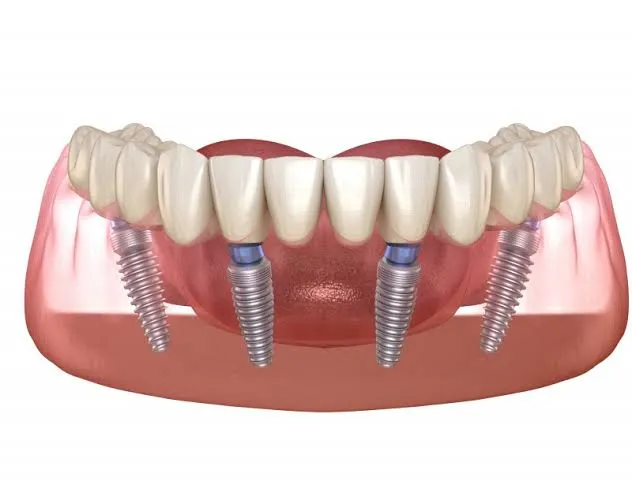
A titanium dental implant is a screw-like post that acts as a prosthetic tooth root. It is surgically placed into the jawbone. A complete restoration consists of three parts:
- The Implant Fixture: The titanium screw that sits beneath the gum line.
- The Abutment: A connector piece that attaches to the fixture.
- The Restoration: A crown, bridge, or denture.
It is important to note that the crown itself is not made of titanium; we typically use Zirconia or E-max porcelain for the visible tooth to ensure a natural aesthetic.
Who Is a Good Candidate?
You are likely a good candidate if you have:
- Adequate jawbone density (or are willing to have a graft).
- Healthy gums.
- Controlled blood sugar (for diabetic patients).
- A commitment to non-smoking during the healing phase.
Why Is Titanium Used for Dental Implants?
Biocompatibility
Titanium is one of the few materials the human body does not reject as a foreign object. When placed in the jaw, the body treats the titanium implant post as part of its own structure.
Osseointegration
In a 1952 study by Per-Ingvar Brånemark, it was discovered that bone grows directly onto the surface of titanium. This creates a permanent, functional bond. Dr. Necat Aslan, our PhD specialist in Prosthodontics with 20 years of experience, notes that this bond is what allows implants to withstand the immense pressure of chewing.
Strength and Corrosion Resistance
Titanium possesses a high strength-to-weight ratio. It does not corrode or rust when exposed to oral fluids, ensuring the titanium implant lifespan can often exceed 25 years with proper care.
Types and Grades of Titanium Implants
Not all titanium is the same. We categorise them into two main groups:
- Commercially Pure (CP) Titanium: Graded 1 through 4. Grade 4 is the most commonly used in our clinic because it offers the highest strength among pure grades.
- Titanium Alloys: The most frequent is Grade 5 (Ti-6Al-4V). This alloy includes small amounts of aluminium and vanadium to increase fracture resistance, making it ideal for narrow implants.
Titanium vs Zirconia Dental Implants
Patients often ask us about Zirconia (ceramic) implants. While Zirconia is tooth-coloured and metal-free, titanium has a much longer clinical track record. However, here’s a quick comparison between the two types:
| Factor | Titanium Implants | Zirconia Implants |
|---|---|---|
| Material | Biocompatible Metal | Bioinert Ceramic |
| Clinical History | 50+ years | ~15 years |
| Design | Two-piece (flexible) | Often one-piece (rigid) |
| Strength | Extremely high | High, but prone to micro-cracks |
| Aesthetics | Grey (hidden by gum) | White (ideal for thin gums) |
The Titanium Dental Implant Procedure at Mavidenta
The process at our 7,000 square-meter facility in Istanbul is methodical and precise. Here are the steps for the procedure:
- 3D Imaging: We use CT scans to assess your bone density.
- Preparation: If the bone is too thin, Dr. Selin Kaya, our periodontist, may perform a bone graft.
- Placement: The titanium implant post is placed under local anaesthesia or sedation.
- Healing: You wait 3–6 months for osseointegration.
- Final Restoration: Dr. Özlem Yalçın designs your final crown using AI smile design technology.
Are Titanium Dental Implants Safe?
Clinical data shows that titanium dental implants are safe for the vast majority of the population. A study published in the Journal of Clinical Medicine (2019) indicates a success rate of over 95% over 10 years.
Titanium Implant Allergy and Side Effects
Titanium implant allergy is extremely rare, affecting less than 0.6% of patients. Symptoms might include skin rashes or gum swelling. If you have a known metal hypersensitivity, we conduct specific patch tests before proceeding. Other titanium dental implant side effects, such as infection (peri-implantitis), are usually related to oral hygiene rather than the metal itself.
How Much Do Titanium Dental Implants Cost?
Price is a major factor for our UK patients. By coming to Mavidenta in Turkey, you can save up to 70% compared to private UK clinics without compromising on material quality. The prices differ as follows:
| Item | UK Private Clinic (Avg) | Mavidenta Turkey |
|---|---|---|
| Titanium Implant (Straumann/Nobel) | £1,500 – £2,500 | £450 – £850 |
| Abutment & Zirconia Crown | £800 – £1,200 | £200 – £350 |
| Total per Tooth | £2,300 – £3,700 | £650 – £1,200 |
Note: Prices at Mavidenta include VIP transfers and in-clinic translators.
From First Message to Final Smile: A Mavidenta Patient Story
Mike, a 54-year-old receptionist from Manchester, contacted us via WhatsApp after losing two lower molars. He was worried about the “metal” in his mouth and the safety of travelling abroad.
Assessment: During a video call, we reviewed his X-rays and explained the biocompatibility of Grade 4 titanium. Mike felt reassured by the lifetime guarantee we provide on all implant fixtures.
Arrival: Our VIP transport met Mike at Istanbul Airport. The next morning, he met Dr. Ahmet Yıldız, our oral surgeon. Mike admitted he was nervous about the pain. Dr. Yıldız explained every step and performed the surgery in under 45 minutes.
Treatment: “I thought I’d be in agony, but I actually went for a walk by the Bosphorus that evening,” Mike told our patient coordinator. He returned to Manchester three days later with temporary teeth.
Result: Four months later, Mike returned for his permanent crowns. The titanium implants had integrated perfectly. He now eats everything from steak to apples without a second thought. “The best part wasn’t just the price,” Mike said during his final check-up, “it was the honesty of the doctors when I was scared.”
Titanium Implant Brands at Mavidenta
We only use Swiss and German systems with global recognition, including:
- Straumann (Switzerland): The global leader in implant technology.
- Nobel Biocare (Sweden/USA): Pioneers of the All-on-4 technique.
- Medigma (Germany): High-precision engineering for complex cases.
Why Choose Mavidenta?
At Mavidenta, we have treated over 15,000 patients from 47 countries. Our 97.8% success rate is built on the expertise of specialists like Dr. Ahmet Yıldız, who handles our most complex maxillofacial cases. We provide a 20-year warranty on crowns and a lifetime guarantee on the titanium implant post itself.
If you are ready to restore your smile, contact us today for a transparent, no-obligation quote.
WhatsApp: +905534843641
Conclusion
After more than 70 years of clinical research, over a decade of documented outcomes at Mavidenta, and thousands of patients who have walked out of our Istanbul facility eating, speaking, and smiling without a second thought, the case for titanium dental implants practically makes itself in modern dentistry.
The material fuses with your bone. It does not corrode. It withstands the full force of a natural bite. And when placed by a qualified surgeon using a premium system like Straumann or Nobel Biocare, it carries a clinical success rate exceeding 95% over ten years, backed at Mavidenta by a lifetime guarantee on every implant fixture we place.
Send your X-rays or dental photographs to our team via WhatsApp at +905534843641 for a free specialist assessment and a transparent, itemised quote.
FAQs
Are titanium dental implants safe for long-term use?
Yes. Titanium has been used in hip replacements and dental implants for over 50 years. It is non-toxic and highly resistant to the oral environment.
Can titanium implants rust?
No. Titanium forms a passive oxide layer the moment it is exposed to oxygen, which protects it from corrosion and “rusting” in the presence of saliva.
Do titanium implants set off airport metal detectors?
Generally, no. The implants are small and non-ferromagnetic. They do not typically trigger standard airport security scanners.
Can I get an MRI with titanium implants?
Yes. Titanium is non-paramagnetic. It does not react to the magnets in an MRI machine, though it may cause a small amount of “noise” or interference in the immediate image area.
How long does osseointegration take?
Typically, it takes 3 months for the lower jaw and 4 to 6 months for the upper jaw, as the upper bone is generally less dense.