

Choosing between braces vs lingual braces often comes down to a balance between clinical necessity and your daily confidence. At Mavidenta, we have seen patients struggle with the idea of visible metal, even when they require the precision of fixed orthodontics.
This is why our dental clinic in Istanbul specialises in solving these dilemmas by offering advanced systems like Incognito braces. Our 7,000 square-meter facility is equipped with the digital scanning technology required for these complex custom appliances.
If you are weighing up your options, you can reach our specialists directly for a free assessment. WhatsApp us at +905534843641 to discuss your case.
What Are Traditional Braces?
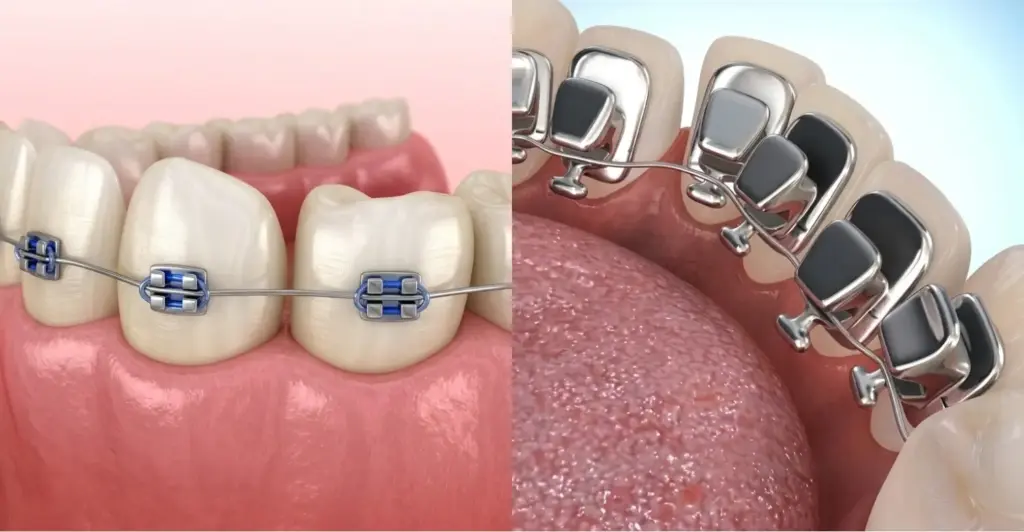
Traditional braces remain the gold standard for many orthodontic corrections. They consist of brackets bonded to the front of the teeth, connected by an archwire.
How metal and ceramic braces work
Metal braces use high-grade stainless steel. Dr. Murat Demir, our specialist orthodontist with 15+ years of experience, uses these to exert precise pressure on each tooth. Ceramic braces work identically but use tooth-coloured or clear brackets to blend in with your enamel.
Who are they best suited for?
These are ideal for complex bite issues, severe overcrowding, or patients who want the most cost-effective solution. In our clinic, we often recommend them for younger patients or those with significant jaw misalignments.
For the treatment pathway, see our guide to [dental treatments at Mavidenta].
What Are Lingual Braces?
Simply put, lingual braces are fixed braces fitted to the inside (lingual side) of the teeth. This makes them completely hidden from view when you smile or speak.
How lingual braces are fitted (behind the teeth)
Unlike standard brackets, lingual braces are 100% customised. We take a digital impression of the back of your teeth. These custom brackets are then manufactured in a laboratory to fit the unique contours of your dental anatomy.
Incognito and other lingual systems
Incognito is a gold-standard lingual system we use at Mavidenta. Because these brackets are custom-cast, they are thinner and more comfortable than older “inside braces” models.
Who are they best suited for?
These are perfect for adult professionals, performers, or anyone who needs fixed orthodontic correction but cannot accept the look of traditional metal.
Traditional Braces vs Lingual Braces: Side-by-Side Comparison
Visibility — the biggest difference
Hidden braces vs traditional braces is a clear win for lingual systems regarding aesthetics. Traditional braces are always visible. Lingual braces are truly invisible to the outside observer.
You can compare the next steps in our [clear Aligners vs Braces] guide.
Comfort and adjustment period
Standard braces can irritate the cheeks and lips. Lingual braces, however, interact with the tongue. Most of our patients at Mavidenta report a 10-to-14-day adjustment period for their tongue to get used to the new hardware.
Speech impact
There is a slight lisp associated with lingual orthodontics initially. However, because we use the Incognito system, which features lower-profile brackets, this usually resolves within a week.
Cleaning and hygiene
Cleaning inside braces requires more diligence. You will need a water flosser and interdental brushes to ensure no food is trapped against the tongue-side of the tooth, which is harder to see in a mirror.
Treatment time
A study in the Journal of Clinical Orthodontics (2019) indicated that while treatment times are similar, lingual cases may take 2–4 months longer for complex rotations due to the shorter distance between brackets.
Cost: Traditional Braces vs Lingual Braces
The cost of lingual braces is higher because of the custom laboratory work and the specialist expertise required to adjust them. Below is a comparison of typical costs in Turkey vs. the UK:
| Treatment Type | UK Average Price | Mavidenta (Turkey) Price |
|---|---|---|
| Metal Braces | £2,500 – £4,000 | £1,200 – £1,800 |
| Ceramic Braces | £3,000 – £5,500 | £1,500 – £2,200 |
| Lingual Braces (Incognito) | £5,000 – £9,000 | £2,800 – £4,500 |
Prices include VIP transfers, accommodation assistance, and all clinical consultations at Mavidenta.
Lingual Braces vs Clear Aligners: Which Is More Discreet?
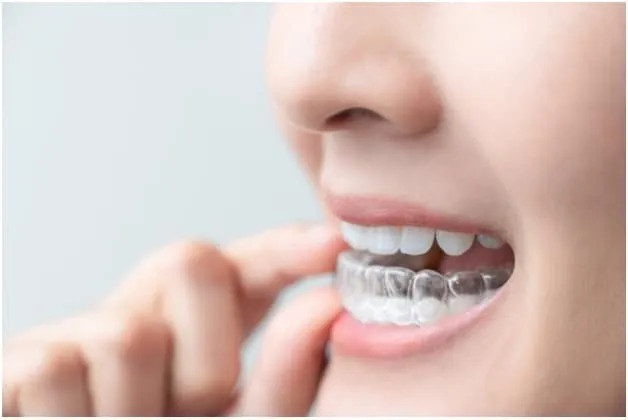
Many patients ask about lingual braces vs Invisalign. While aligners are clear, they are not invisible; you can see the plastic sheen and the “attachments” on the teeth. Lingual braces are the only truly 100% hidden option. Furthermore, lingual braces are “always on,” meaning you don’t have to remember to put them back in after eating.
Lingual Braces in Turkey: Are They Available?
Yes, but they require a specialist orthodontist. At Mavidenta, Dr. Murat Demir handles all lingual cases. Not every clinic in Istanbul offers this, as it requires specific certification and laboratory partnerships.
How many trips do you need?
Orthodontics requires regular adjustments. If you choose lingual braces in Turkey, you generally need to visit every 6–8 weeks. For this reason, many of our UK patients choose “fast-track” orthodontics or full-mouth restorations (veneers/crowns) if they cannot travel frequently. However, for those who stay in Turkey for work or can travel, we provide a full concierge service.
From First Message to Final Smile: A Mavidenta Patient Story
Claire, a 34-year-old marketing executive from Manchester, was desperate to straighten her teeth but refused the “train-track” look for her boardroom meetings. She contacted us via WhatsApp after seeing our 97.8% success rate.
During her initial assessment, Dr. Murat Demir explained that her deep bite made her a perfect candidate for Incognito lingual braces. Claire had a moment of doubt when she arrived in Istanbul; she worried the “inside braces” would make it impossible to speak clearly during her presentations.
Dr. Demir spent an hour showing her the low-profile brackets and explaining the speech adaptation process. “The team at Mavidenta made me feel like a person, not a number,” Claire noted.
She visited Istanbul five times over 14 months. We arranged her VIP transfers from the airport to her hotel each time. By her third visit, she told us, “Nobody even knows I’m wearing them, but I can see my teeth moving every week.” Today, Claire has a perfectly aligned smile without a single person ever knowing she wore braces.
Pros and Cons Summary Table
| Feature | Traditional Braces | Lingual Braces |
|---|---|---|
| Aesthetics | Visible | Completely Hidden |
| Comfort | Lip/Cheek irritation | Tongue irritation |
| Price | Affordable | Premium |
| Complexity | All cases | Most cases |
| Cleaning | Moderate | Challenging |
How to Choose Between Braces and Lingual Braces
If budget is your primary concern, traditional braces are the best choice. If you are in the public eye or feel extremely self-conscious, lingual braces are worth the investment.
At Mavidenta, we don’t just fix teeth; we design smiles that fit your lifestyle. Whether you choose Dr. Özlem Yalçın for aesthetic design or Dr. Murat Demir for orthodontics, you are in expert hands.
Ready to start? Message us on WhatsApp: +905534843641 for a free digital smile preview.
Read more about [affordable Teeth Straightening Cost Turkey Guide for You] before choosing the right option.
Conclusion
The decision between traditional braces vs lingual braces ultimately comes down to two questions: how visible is your smile in your daily professional and social life, and what is your budget for the privacy that lingual systems provide?
If the answer is that you work in a boardroom, stand in front of a camera, or simply cannot face 18 months of visible metal brackets, then lingual braces are not a vanity upgrade. They are a clinically sound solution that delivers the same corrective force as traditional fixed orthodontics, with zero external visibility.
If your bite correction is complex, your budget is fixed, or visibility is genuinely not a concern in your daily life, then traditional braces remain the most precise and cost-effective path to a corrected smile. The clinical outcomes are equivalent. The difference is entirely in the experience of wearing them.
Send your photographs or a description of your bite concerns to our team via WhatsApp at +905534843641 for a free digital smile preview and a specialist recommendation.
FAQ: Braces vs Lingual Braces
What is the difference between lingual braces and normal braces?
The primary difference is placement. Normal braces are bonded to the front of the teeth. Lingual braces are bonded to the back, making them invisible from the outside.
Are lingual braces more painful than regular braces?
They aren’t more painful, but the discomfort is in a different place. You will feel soreness on your tongue rather than your cheeks for the first week.
Can I get lingual braces in Turkey?
Yes, Mavidenta offers full lingual orthodontic services using the Incognito system. You will need a consultation with Dr. Murat Demir to ensure your bite is suitable.
Are lingual braces worth the extra cost?
For patients who value total discretion, yes. The cost reflects the custom-made gold-alloy brackets and the specialist time required for adjustments.
How long do lingual braces take vs regular braces?
Treatment time is usually comparable, ranging from 12 to 24 months depending on the severity of the misalignment.
Which is better — lingual braces or Invisalign?
Lingual braces are better for complex rotations and patients who lack the discipline to wear removable aligners for 22 hours a day.