Choosing between clear aligners vs braces often feels like a choice between aesthetics and inconvenience. At Mavidenta Dental Clinic in Istanbul, we have seen patients from London to Dubai struggle with this decision. Both systems work, but they serve different biological needs.
We house experienced doctors at a 7,000 square meter specialist facility where we treat over 1,500 international patients annually. Our orthodontic lead, Dr. Murat Demir (Orthodontist, 15+ years experience), focuses on aligning teeth while respecting the bone structure of the jaw. If you are unsure which path is right for your smile, you can send us your photos for a free online consultation via WhatsApp at +905534843641.
What Are Clear Aligners?
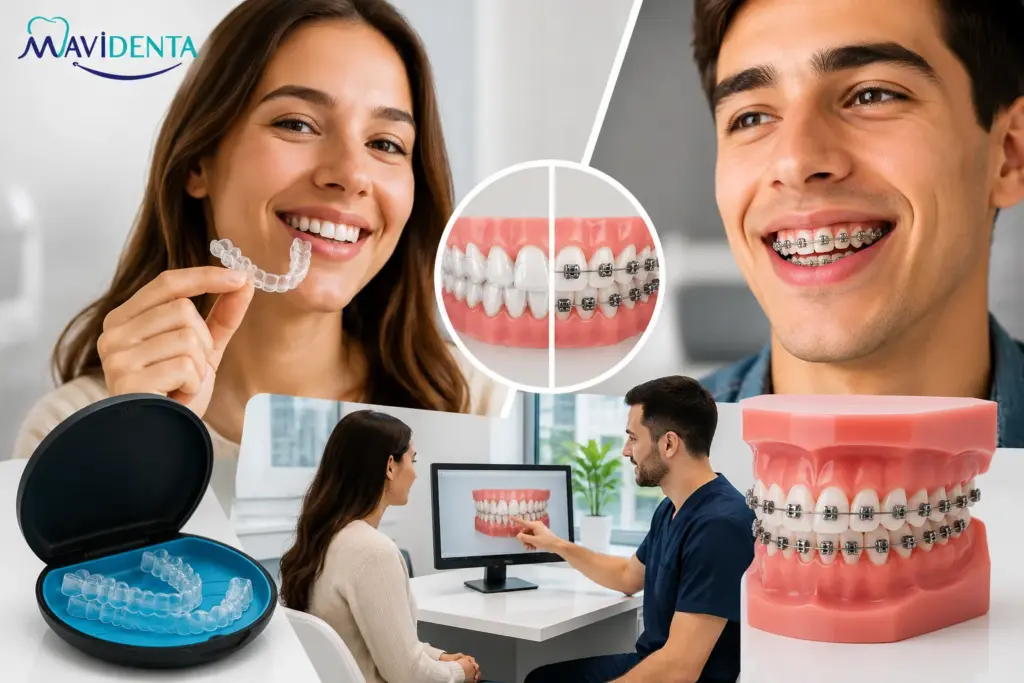
Clear aligners are removable, transparent plastic trays custom-moulded to your teeth. Unlike fixed hardware, they use incremental pressure to move teeth into a programmed position.
How they work
Systems like Invisalign or the boutique aligners we create at Mavidenta use a series of trays. Each tray is worn for about 7 to 10 days. By the time you reach the final tray, your teeth have shifted several millimetres. Dr. Murat Demir observes that patient compliance is the biggest factor here; if you don’t wear them 22 hours per day, the bone does not remodel.
Materials and how they’re made
We use medical-grade, BPA-free thermoplastic. Process begins with a 3D intraoral scan, no messy putty. Our AI software predicts the movement of each tooth, allowing you to see your final smile before the first tray is even printed.
For the treatment pathway, see our guide to [dental treatments at Mavidenta].
What Are Traditional Braces?
Traditional braces remain the “gold standard” for complex structural changes. They are fixed appliances that stay on your teeth until the treatment ends.
Metal vs ceramic brackets
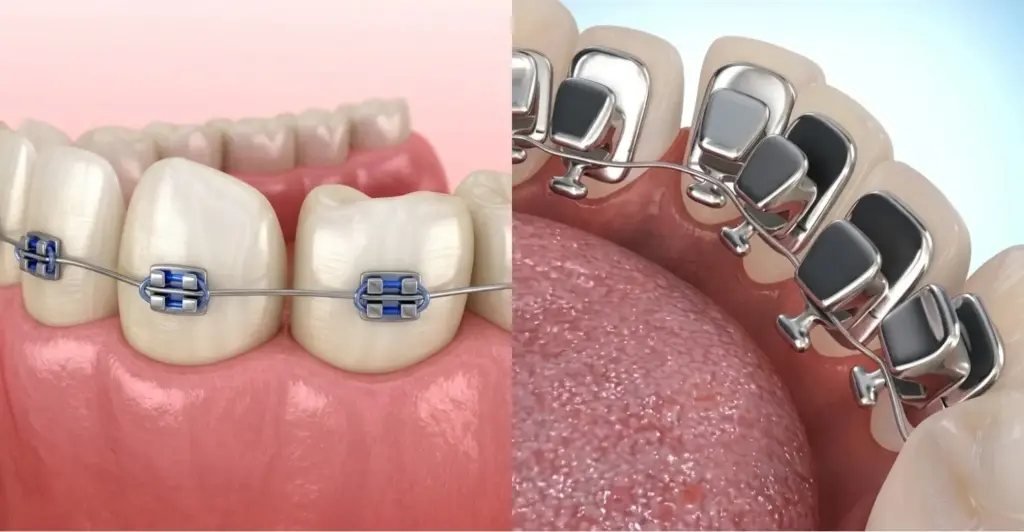
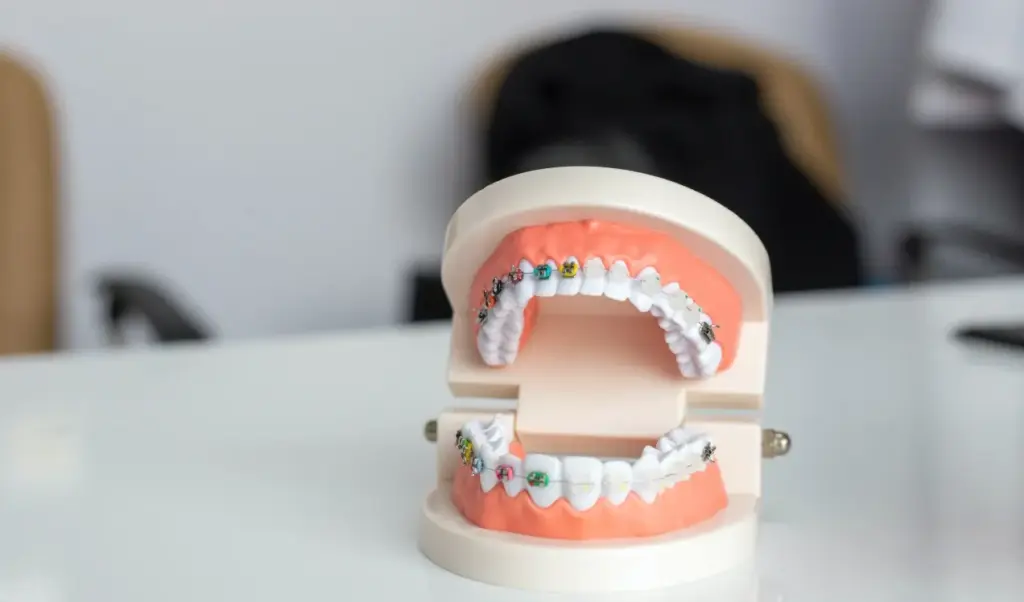
Metal braces use high-grade stainless steel. For patients concerned about visibility, we offer ceramic braces. These use polycrystalline alumina brackets that blend with your natural tooth shade. While more discreet, they are slightly more brittle than metal.
How the wire-and-bracket system works
The brackets are bonded to your teeth, and an archwire is threaded through them. This wire wants to return to its original shape, pulling your teeth along with it. This constant, 24/7 pressure is why braces often finish complex cases faster than aligners.
Clear Aligners vs Braces: Side-by-Side Comparison
Determining which is better, aligners or braces, depends on your specific bite chemistry.
Treatment time
On average, clear aligners take 6 to 18 months. Braces typically require 18 to 24 months. However, for minor crowding, aligners are often faster because they can move multiple teeth simultaneously.
Comfort and visibility
Aligners win on aesthetics. They are nearly invisible. Braces can cause minor abrasions on the inner cheeks, though modern low-profile brackets have reduced this discomfort significantly.
Maintenance and hygiene
With aligners, you take them out to eat and brush. This reduces the risk of white spot lesions (decalcification). With braces, you must use special floss threaders and interdental brushes to clean around the hardware.
Effectiveness for complex cases
A 2021 study in the Journal of Orofacial Orthopedics confirmed that while aligners are excellent for tilting teeth, fixed braces are superior for “bodily movement” (moving the root and crown together) and closing large extraction gaps.
Who Should Choose Clear Aligners?
Clear aligners are ideal for adults and professionals who prioritise discretion. If you have mild-to-moderate crowding or small gaps, aligners are usually the most comfortable route. They suit patients with high self-discipline who can commit to wearing the trays religiously.
Who Should Choose Traditional Braces?
We recommend traditional braces for severe rotations, deep overbites, or cases requiring significant jaw alignment. They are also better for younger patients who might lose removable trays. According to Dr. Selin Kaya, our periodontist, braces allow for precise control in patients who may have underlying gum health considerations that require slow, steady movement.
how Long Do Braces Take to Straighten Teeth? (Realistic Timelines for Every Case)
Cost Comparison: Aligners vs Braces in Turkey vs UK
Cost is a major factor for our UK patients. In London or Manchester, private orthodontic work is often priced as a “luxury” service. At Mavidenta, we offer the same Swiss and German materials at a fraction of the price due to lower overheads and currency advantages.
Here is the price in clear aligners vs braces in both the UK and Turkey:
Treatment Type | Average UK Price | Mavidenta (Turkey) Price | Savings |
|---|---|---|---|
| Metal Braces | £2,500 – £4,000 | £1,200 – £1,800 | ~60% |
| Clear Aligners (Full) | £3,500 – £5,500 | £1,800 – £2,500 | ~65% |
| Ceramic Braces | £3,000 – £4,500 | £1,500 – £2,000 | ~60% |
Note: Prices include all consultations, X-rays, and initial retainers.
Pros and Cons Summary Table
Feature | Clear Aligners | Traditional Braces |
|---|---|---|
| Visibility | Nearly Invisible | Noticeable (Metal or Ceramic) |
| Removability | Yes (Take out to eat) | No (Fixed 24/7) |
| Diet | No restrictions | No hard/sticky foods |
| Speech | Slight lisp for 48 hours | Minimal impact |
| Reliability | Depends on the patient | Guaranteed movement |
Is it safe to get orthodontics in Turkey?
Safety is our priority. Mavidenta is a Ministry of Health-accredited facility. Our 97.8% success rate in complex rehabilitations is a result of our multidisciplinary approach. Dr. Necat Aslan (PhD in Prosthodontics, 20 years of experience) often consults on orthodontic cases to ensure the final tooth positions align perfectly with the patient’s facial symmetry. We provide a lifetime guarantee on implants and a 20-year warranty on our crown work, ensuring your investment is protected.
From First Message to Final Smile: A Mavidenta Patient Story
Claire, a 41-year-old nurse from Leeds, was self-conscious about her crowded lower teeth but didn’t want “train tracks” in the hospital.
Contact & Assessment: Claire messaged our WhatsApp team in June. She sent five clear photos of her bite. Dr. Murat Demir reviewed them and determined she was a perfect candidate for clear aligners.
Arrival: We arranged Claire’s VIP transfer from Istanbul Airport. She stayed in a nearby 5-star hotel coordinated by our team.
Treatment: On her first day at Mavidenta, Claire had her 3D scans. She was nervous about the “hidden costs” she’d read about regarding medical tourism. During the consultation, we gave her a fixed price that included her transfers and accommodation. Claire said, “I was waiting for the ‘but,’ but the price was exactly what I was quoted on WhatsApp.”
Recovery & Follow-up: Claire returned home with her first 6 months of trays. We conducted monthly check-ups via video call.
Result: Fourteen months later, Claire’s teeth are perfectly straight. “The best part wasn’t just the price,” She told us during her final check-up, “it was knowing I had a specialist I could text anytime I had a question about anything.”
Read more about [braces vs Lingual Braces] before choosing the right option.
Conclusion: How to Decide Which Is Right for You?
The choice between clear aligners vs braces comes down to your lifestyle and the complexity of your bite. If you want the freedom to eat what you like and keep your treatment private, choose aligners. If you have a complex bite issue that needs the most reliable mechanical force, traditional braces are the answer.
Ready for a professional opinion? Contact our specialists today on WhatsApp: +905534843641.
FAQ: Clear Aligners vs Braces
Which is more painful, aligners or braces?
Neither is “painful,” but both cause pressure. Braces usually feel tighter after the monthly adjustment. Aligners feel snug for the first 24 hours after a new tray is placed. Most patients find aligners more comfortable because there are no metal edges that can irritate the lips.
Can I switch from braces to Invisalign halfway through?
It is possible, but requires a new treatment plan and additional costs for the aligner manufacturing. We usually recommend deciding on one method and sticking to it for the best biological outcome.
Do clear aligners work as fast as braces?
For simple crowding or closing small gaps, aligners can actually be faster. For complex cases involving tooth rotations or vertical movements, traditional braces are typically more efficient and predictable.
Does the clear aligner cost in Turkey include the trays?
Yes. At Mavidenta, our quote includes the 3D scanning, the full series of aligner trays required for your specific case, and your final retainers to ensure your teeth don’t move back.
Is there a “best” age for clear aligners?
Aligners are best for older teens and adults whose jaws have finished growing. For younger children, we usually recommend traditional braces or functional appliances to guide jaw growth effectively.