Do you have irregular teeth and you’ve been told that they need straightening? You search online, you ask for an NHS referral, and then the waiting begins. Months turn into years on a list that never seems to move. When private quotes finally land in your inbox, the numbers are eye-watering, maybe £3,000 or even £5,000.
It’s no wonder that thousands of British patients are now considering dental tourism in Turkey, as it offers world-class clinics, internationally trained specialists, and state-of-the-art technology, combined with a cost of living that allows savings of up to 70% compared with equivalent UK private prices.
At Mavidenta Dental Clinic in Istanbul, we have welcomed more than 5,000 patients from the United Kingdom, patients who arrived uncertain and left with transformed smiles and genuine confidence.
We are proud to back every treatment we provide with our industry-leading 20-year warranty, a commitment to your long-term results that speaks louder than any brochure.
In this guide, we will walk you through everything you need to know about how long do braces take, from the factors that influence treatment timelines, to the different brace types available, to what happens after braces.
Ready to take the first step? Book your free, no-obligation consultation with our UK patient team today!
The Short Answer: Why It Varies So Much
The short answer to the question of “How long do braces take?” is anywhere from 6 to 36 months, which, understandably, feels like no answer at all.
So let us be direct: for the majority of adults, braces take between 12 and 24 months. That is the realistic middle ground.
But the honest truth is that treatment length is decided almost entirely by your teeth, specifically, how much movement they need to make, and how your bone responds to that movement.
Teeth shift through a biological process called bone remodelling. Your orthodontist applies controlled pressure; the bone on one side of each tooth gradually dissolves, and new bone forms on the other side to anchor the tooth in its new position.
This process cannot be safely rushed. What can be optimised, however, is the planning behind it, the precision of your diagnosis, the technology used, and the experience of your clinical team.
At Mavidenta, our orthodontists use advanced 3D digital scanning to map your full treatment journey before a single bracket is placed, giving you an accurate timeline from day one, not a vague estimate.
Want to know how long your specific case will take? Book a free digital consultation with Mavidenta’s UK team.
dental treatments at Mavidenta
Braces Timeline by Severity
Understanding how long do braces take starts with honestly assessing the complexity of your case. Orthodontic cases are generally grouped into three categories, and your position within them will shape everything, from the type of brace recommended to the total duration of treatment.
Mild crowding/spacing (6–12 months)
If your teeth are only slightly crooked, mildly crowded, or have small gaps between them, you are in the most straightforward treatment category. Cases at this level typically resolve within 6 to 12 months, and many patients in this group are excellent candidates for clear aligners rather than fixed braces.
Common characteristics of mild cases include:
- One or two teeth slightly out of alignment.
- Small gaps that are cosmetic rather than functional.
- Minor crowding in the upper or lower arch only.
- No significant bite issues (overbite, underbite, or crossbite).
Moderate cases (12–18 months)
Moderate orthodontic cases represent the largest portion of adult patients seeking braces. At this level, braces typically take 12 to 18 months, though individual variation is significant. These cases involve more complex tooth movement, often across both arches simultaneously.
You are likely in the moderate category if you have:
- Noticeable crowding in both upper and lower teeth.
- A mild overbite or underbite requires correction.
- Gaps distributed across multiple teeth.
- Teeth that have drifted following previous extractions.
- Minor rotations in several teeth.
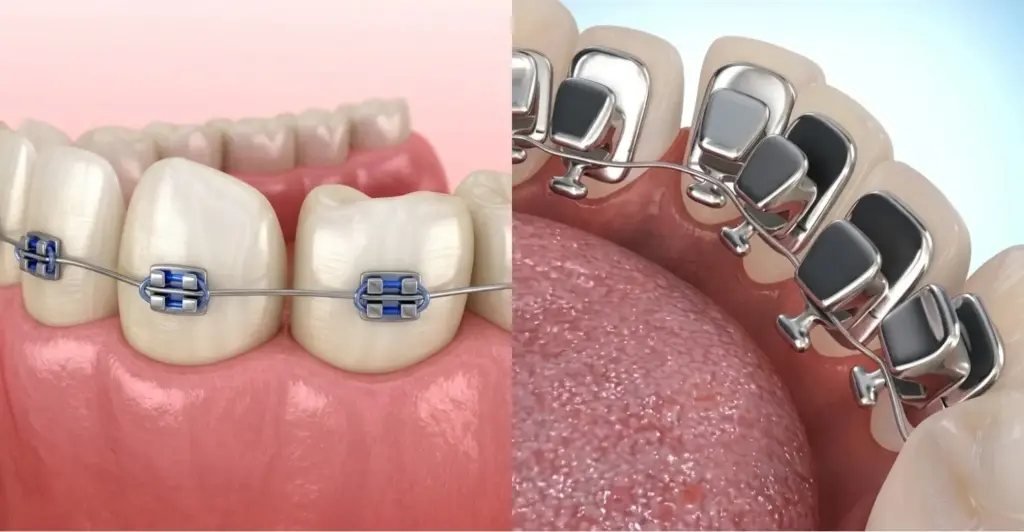
At Mavidenta, the majority of our UK patients fall within this range. Our orthodontic team uses high-performance self-ligating brackets and individually tailored wire sequencing — a combination that produces efficient, predictable movement and often keeps treatment at the lower end of the estimated timeframe.
Severe/complex cases (18–36 months)
For patients with significant orthodontic needs, braces can take up to 18–36 months, and in some surgical cases, beyond. Severe cases require careful, staged treatment and a high degree of clinical expertise. Rushing this process risks root damage, relapse, or incomplete correction.
Severe cases typically involve:
- Significant crowding requiring extractions before treatment.
- Pronounced overbites, underbites, open bites, or crossbites.
- Skeletal discrepancies that may require combined orthodontic and surgical treatment.
- Adult patients with previous failed orthodontic treatment.
- Multiple impacted or displaced teeth.
Complex case? Don’t be discouraged. Book a specialist consultation at Mavidenta; our team has seen it all.
Braces vs Invisalign: Which Is Faster?
This is one of the most common questions we hear, and it deserves a clear, honest answer rather than a marketing pitch for either option.
In short, for mild to moderate cases, Invisalign and traditional braces deliver comparable timelines. For complex cases, fixed braces are generally faster and more precise.
This table explains how long do braces take vs. Invisalign:
| Severity | Traditional Braces | Invisalign / Clear Aligners |
| Mild cases | 6–12 months | 6–10 months |
| Moderate cases | 12–18 months | 12–18 months |
| Severe cases | 18–36 months | Often not suitable |
| Compliance required | None — fixed in place | High — must wear 22 hrs/day |
| Visibility | Noticeable | Nearly invisible |
| Cost at Mavidenta | From £900 | From £1,200 |
| UK Cost | From £2,500 | From £3,500 |
The critical variable with Invisalign is patient compliance. Aligners must be worn for a minimum of 22 hours per day to stay on schedule. Patients who remove them during meals and forget to replace them promptly will find their treatment extending well beyond the original estimate.
For working professionals and adults who prioritise discretion, Invisalign remains a superb option, and at Mavidenta, our clear aligner treatments are designed and monitored digitally, with remote check-ins available for UK patients between their visits.
Not sure which is right for you? Talk to a Mavidenta specialist today, and we’ll guide you to the right choice, not the most expensive one.
Do Adult Braces Take Longer Than Teen Braces?
The honest answer here is yes, slightly. The answer to the “how long do braces take” question differs a bit based on your age, but far less than most people assume, and rarely enough to change your decision.
Teen teeth move through the bone that is still actively developing. Adult bone is denser and more fully mineralised, which means the remodelling process is marginally slower. In practical terms, this typically adds 2 to 4 months to an equivalent adult case compared with a teenage patient, not years.
What matters far more than age are the factors below:
- Complexity of the case: The primary driver in any age group.
- Compliance: Adults typically wear aligners more consistently than teenagers.
- Oral health baseline: Adults with healthy gums and no underlying dental issues progress just as well as younger patients.
- Clinical expertise: An experienced orthodontist can offset the biological difference through precise force application and treatment sequencing.
At Mavidenta, a significant proportion of our UK patients are adults between 35 and 60. Many arrive having assumed for years that they had “left it too late.” Without exception, they have not. Adult orthodontic treatment at our clinic routinely achieves the same quality of outcome as treatment completed in adolescence.
You can compare the next steps in our [clear Aligners vs Braces] guide.
— Patricia, Leeds: “I was 51 when I started. I genuinely thought I’d missed my chance. Fourteen months later, I had the smile I’d always wanted.”
Factors That Slow Down Your Treatment
Understanding what makes braces take longer and what you can control puts you in a far stronger position as a patient. Some delays are biological and unavoidable. Others are entirely within your hands.
Factors outside your control:
- Bone density: Denser adult bone moves more slowly; this cannot be changed, only planned for.
- Root length and shape: Certain tooth anatomies require gentler, longer-duration forces.
- Previous dental work: Crowns, implants, or old restorations can complicate tooth movement.
- Genetics: Jaw structure and bite patterns are largely inherited.
Factors you can actively manage:
- Oral hygiene: Inflamed gums slow treatment and can cause irreversible damage; brush and floss meticulously around brackets.
- Missed appointments: Every skipped adjustment extends your timeline; in Turkey, this is mitigated by Mavidenta’s structured visit schedule paired with remote monitoring.
- Broken brackets: Hard foods, contact sports without a mouthguard, and improper cleaning all cause bracket failures that set treatment back by weeks.
- Aligner compliance: Removing clear aligners too frequently is the single biggest cause of extended Invisalign treatment.
- Ignoring discomfort: New soreness after adjustments is normal; calling your clinic early about genuine pain prevents longer interruptions.
At Mavidenta, our UK patient coordinators provide a comprehensive pre-treatment briefing so that you arrive at every stage of your journey fully informed, and your treatment stays firmly on schedule.
How Long Do Braces Take in Turkey?
Dr. Ayşe Kaya, Senior Restorative Dentist at Mavidenta Istanbul:
“A 41-year-old project manager from Leeds sat across from me last autumn, arms crossed, slightly guarded, the way many of my UK patients are at their first consultation. She had spent three months researching braces online before flying to Istanbul.
By the time she found us at Mavidenta, she had convinced herself her treatment would take at least 24 months. She was actually looking at 14. A timeline means nothing without a diagnosis. Every number you read online is, at best, a statistical average applied to someone else’s teeth.
The clinical answer to how long do braces take does not change when you cross a border. The mechanics of orthodontic force are universal. What changes when UK patients come to Mavidenta is not the quality of the outcome; it is the cost, the technology available to us, and the structure of how we work together across distance.
When a UK patient arrives at our clinic, the first thing I do is what should always be done first: I look at their teeth. We take a full set of digital scans and radiographs, assess the bone levels, map the severity of crowding or bite discrepancy, and only then do we sit down and talk about timelines.
The woman from Leeds I mentioned? She flew out for her debond appointment on a Thursday, spent the weekend in the city, and was back at her desk on Monday with her braces off and her retainers in. Her total investment was just under £1,100. She had been quoted £4,200 by a private clinic in her city for the same treatment plan.”
What Comes After Braces? Retainers Explained
Many patients focus entirely on how long do braces take, and forget to ask what happens the moment they come off. This is one of the most important parts of your treatment, and one of the most frequently misunderstood.
The truth is, without retainers, your teeth will move back. This is not a scare tactic; it is basic biology. The bone surrounding your newly positioned teeth is still settling. The elastic fibres in your gums retain a “memory” of their original position and will pull teeth back toward it if given the opportunity.
Orthodontic relapse is common and almost entirely preventable. There are two main types of retainer:
- Removable retainers (Hawley or clear): Worn full-time initially, then nights-only long term; easy to maintain but require discipline.
- Fixed (bonded) retainers: A thin wire bonded behind your front teeth; invisible, maintenance-free, and our most recommended option for long-term stability.
At Mavidenta, retainers are included as part of your full treatment package. Our 20-year warranty covers the stability of your results, giving you not just a new smile, but the confidence that it will last.
The general retainer timeline:
- Months 1–6: Wear removable retainer 20–22 hours per day
- Months 6–12: Nights only
- Year 1 onwards: Several nights per week, indefinitely (or rely on your fixed retainer)
Conclusion
In the end, the answer to “how long do braces take?” depends far less on a generic online estimate and far more on your individual case, your treatment plan, and the expertise of the orthodontic team guiding you.
At Mavidenta Dental Clinic, we believe patients deserve honest timelines, advanced technology, and treatment plans tailored to their real needs, not unrealistic promises. With experienced orthodontists, 3D digital planning, affordable pricing for UK patients, and our industry-leading 20-year warranty, we make it possible to achieve a confident smile without years of waiting lists or overwhelming private UK costs.
Whether you are considering traditional braces or Invisalign, mild corrections or a complex orthodontic case, the first step is always a professional assessment. Once you understand your specific treatment timeline, the process becomes far less intimidating and far more exciting.
Your future smile may be closer than you think. Book your free consultation with Mavidenta today and discover how long braces could take for you personally.
Frequently Asked Questions
How long do braces take for mild crowding?
For mild crowding or spacing issues, most patients complete fixed brace treatment in 6–12 months. Invisalign Lite can achieve similar results in as little as 6 months for the most straightforward cases.
Do adult braces take longer than teenage braces?
Generally, yes, by around 20–30%. Adult bone is denser, and teeth move more slowly. However, adults tend to be more compliant with instructions, which partially offsets this.
Is Invisalign faster than braces?
For mild to moderate cases, Invisalign typically achieves results in a similar or slightly shorter timeframe, often 6–18 months. The key advantage is comfort and aesthetics during treatment, not always speed.
Can you speed up braces treatment?
Compliance is the biggest factor: wearing elastics as instructed, attending all appointments, and avoiding foods that damage brackets. Some clinics offer AcceleDent devices that claim to speed up tooth movement by 30–50%, though evidence is mixed.
What happens if I stop wearing my retainer after braces?
Teeth naturally drift back in a process called relapse, which can begin within weeks of stopping. Most orthodontists recommend wearing a retainer nightly indefinitely.